
how to make a small Dubai apartment look bigger in 2026
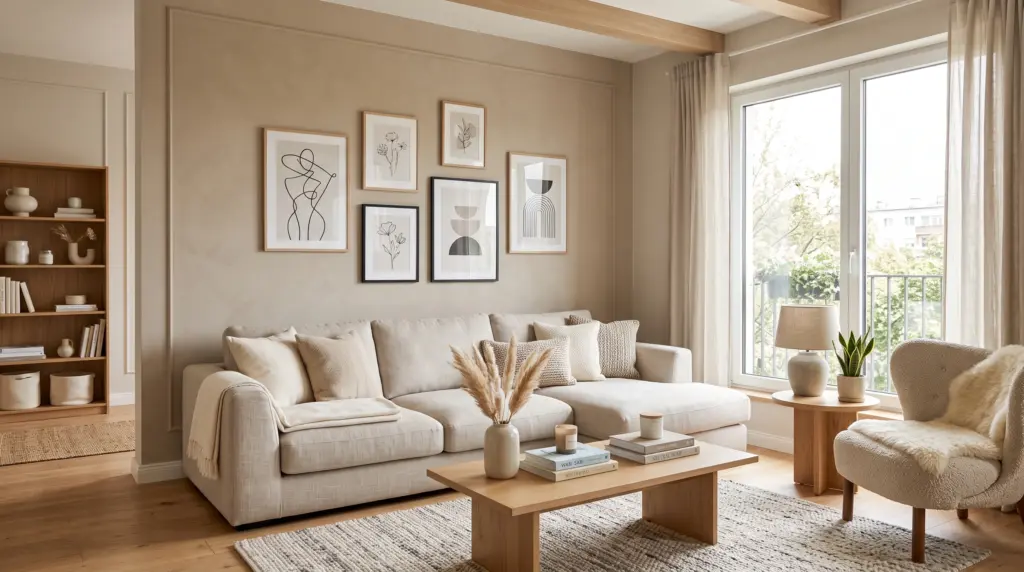
Smart interior design ideas for making compact Dubai apartments feel brighter, larger, and more spacious without major structural changes.
Dubai apartments often combine modern architecture, large windows and premium finishes with relatively compact floor plans. When furniture, storage, window treatments and decorative elements compete for limited space, even a well-designed apartment can start to feel smaller than it actually is.
The good news is that you do not need to remove your personality or sacrifice a luxurious look to create more visual space. Smart interior design choices can change how you perceive the proportions of a room without requiring major structural changes. The right colour palette, curtains, blinds, flooring, furniture scale, mirrors, lighting and storage can make a compact apartment feel brighter, calmer and more open.
For Dubai homes, these decisions also need to work with strong daylight, heat, dust and everyday practical requirements. A beautiful room still needs to remain comfortable and easy to maintain. Kustom Space helps homeowners create interiors that balance aesthetics with practical living, from custom curtains and blinds to flooring, carpets, furniture and complete renovation solutions across the UAE.
1. Start With a Light and Consistent Colour Palette
Choose Soft Neutrals for Walls and Large Furniture
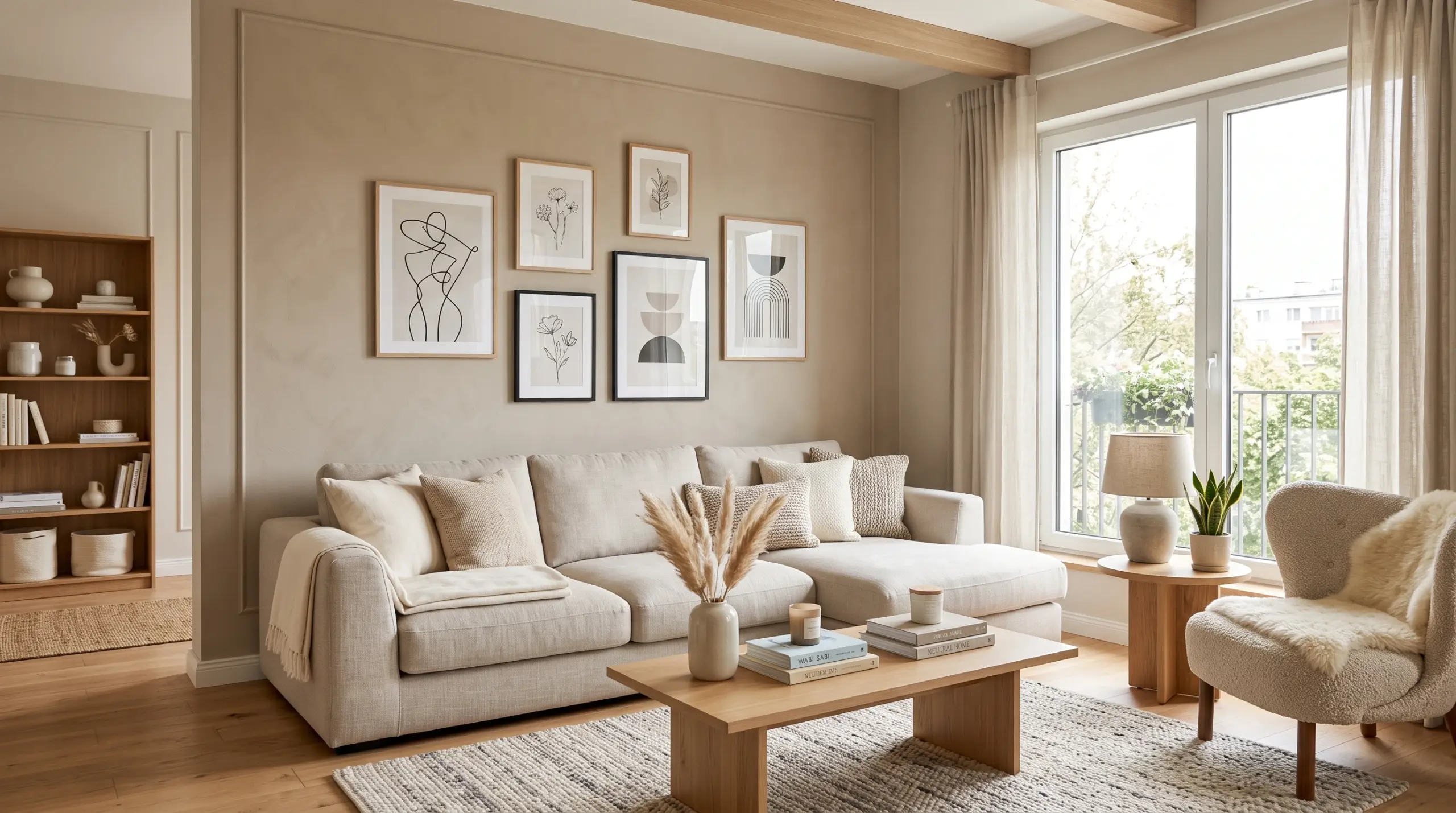
Colour can significantly influence how spacious an apartment feels. For smaller Dubai interiors, soft neutrals such as warm white, cream, beige, greige and light taupe can create a brighter visual foundation without making the room feel cold.
Use these lighter shades across larger surfaces such as walls, flooring and major furniture pieces. When neighbouring surfaces share similar tones, the eye moves more smoothly around the room instead of stopping at strong colour boundaries. This visual continuity can make the available space feel more connected.
You do not need to make every surface white. Warm beige or light greige can add depth while maintaining the spacious effect. The key lies in controlling contrast. A small room with several dark furniture pieces, strongly contrasting walls and busy patterns can feel visually fragmented, while a coordinated palette creates a calmer appearance.
For Dubai apartments, consider how your chosen colours interact with natural daylight throughout the day. A shade that looks neutral in a showroom can appear warmer or cooler under strong UAE sunlight, so checking samples in your actual space can help you make a more confident decision.
Use Accent Colours Without Making the Room Feel Smaller
A spacious-looking interior does not need to look plain. You can introduce personality through carefully selected accent colours without overwhelming the room.
Instead of using a bold colour across an entire wall, introduce it through cushions, artwork, throws, decorative accessories or one carefully chosen furniture piece. This approach gives the room character while keeping its largest visual surfaces relatively calm.
You can also repeat one accent shade in different areas. For example, a muted olive tone might appear in a cushion, artwork and small decorative accessory. Repetition creates a deliberate visual connection without adding unnecessary complexity.
The same principle applies to patterns. One large, well-positioned pattern can create a focal point, while too many competing prints can make a compact room feel busy. In smaller apartments, think of decoration as a way to guide the eye rather than fill every available surface.
Why Light Colours Work Especially Well in Dubai Apartments
Dubai homes often receive generous amounts of natural daylight, particularly apartments with large glazed windows or open views. A light interior can help distribute that daylight across the room, making the space feel brighter during the day.
This does not mean that every Dubai apartment needs an all-white interior. Warm neutrals can create a more comfortable and sophisticated atmosphere while still supporting a spacious appearance. Pairing light walls with similarly toned flooring and carefully selected furniture can strengthen the effect.
Window treatments also matter. If heavy or dark curtains cover a large portion of the glazing throughout the day, they can visually reduce the window and absorb some of the room’s brightness. Choosing the right combination of curtains and blinds can help you control glare and privacy while keeping the room visually open.
2. Use Curtains and Blinds to Create the Illusion of Height
Install Curtains Higher and Wider Than the Window
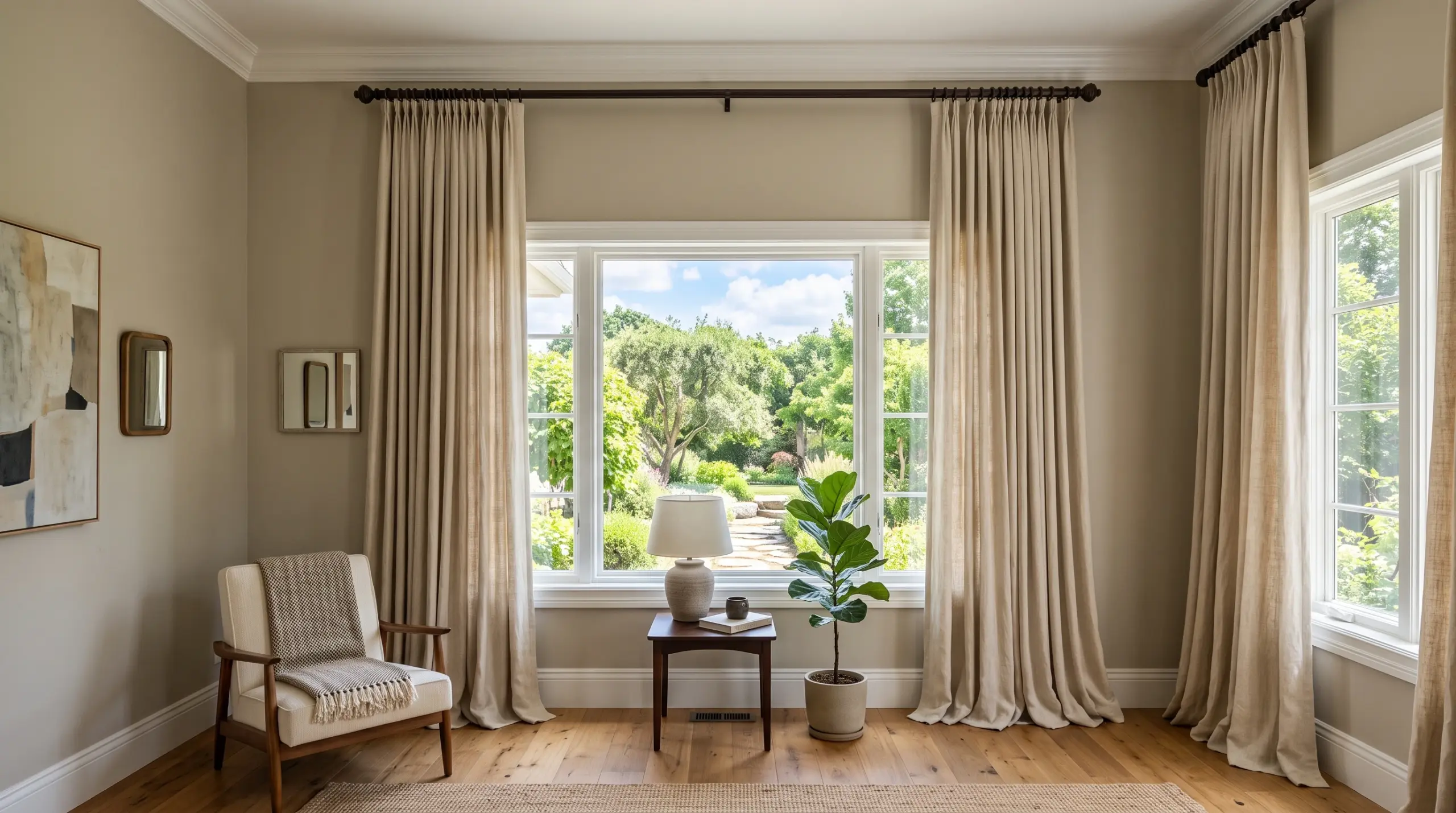
Your windows can influence the perceived proportions of an entire room. One simple technique involves positioning the curtain track or rod higher than the top of the window and extending it wider than the actual frame.
Whenever the layout allows, installing curtains closer to the ceiling draws the eye upward. Full-length curtains that reach the floor can further emphasise the vertical dimension of the room. Extending the treatment beyond the window also allows more of the glass to remain visible when the curtains sit open.
This approach works particularly well in apartments with modest ceiling heights because it creates a stronger sense of verticality without changing the architecture.
Professional installation also matters. Even high-quality curtains can look awkward if the track sits too low, the fabric pools excessively on the floor or the treatment does not align correctly with the window. Correct measurements and fitting can help create the clean, tailored appearance that makes a compact room feel more refined.
Choose Light, Flowing Curtains for Small Rooms
Heavy fabrics can add warmth and luxury, but they can also introduce significant visual weight into a small room. If your priority involves creating a more spacious appearance, consider lightweight curtains, sheers or other fabrics that allow the window area to remain visually open.
Sheer curtains can soften strong Dubai daylight while maintaining a bright atmosphere. You can also combine them with a more practical blind when you need greater privacy, glare control or light management.
Keep the curtain colour close to the wall colour when possible. A low-contrast combination allows the curtains to blend into the architecture instead of creating another strong visual boundary.
For compact apartments, simplicity usually works better than excessive layering. A clean curtain profile, appropriately scaled fabric and well-positioned track can make the window look larger without taking unnecessary visual space from the rest of the room.
When selecting window treatments, consider the room’s actual exposure and daily use. A living room with intense afternoon sun may need a different solution from a bedroom where privacy and darkness matter more. The goal is not simply to choose the lightest curtain available, but to find a treatment that manages Dubai’s sunlight while supporting the room’s proportions.
Compare Vertical and Roller Blinds for Compact Dubai Spaces
Blinds can help you manage sunlight and privacy without adding unnecessary visual weight to a small apartment. When comparing vertical and roller blinds in Dubai, consider the size of the window, the direction of sunlight and how you use the room.
Roller blinds offer a clean, compact profile that works particularly well in bedrooms, kitchens, home offices and smaller living areas. When raised, they occupy very little visual space around the window. You can also choose fabrics that provide different levels of light filtering, privacy and glare control, making them practical for Dubai’s strong daylight.
Vertical blinds can work particularly well for tall or wide windows and larger glazed openings. Their vertical lines can draw the eye upward, which can complement the same visual-height principle used with floor-to-ceiling curtains. They also allow you to adjust the amount and direction of incoming light throughout the day.
For apartments with balcony doors or wide windows, vertical blinds can provide flexible coverage while maintaining a relatively streamlined appearance. Roller blinds can work well where you want a minimal treatment that sits neatly within the window area.
The best option depends on the room rather than a universal rule. A bedroom may benefit from a blackout roller blind, while a living room with large glazing may benefit from vertical blinds or a combination of blinds and curtains. Kustom Space can help you select window treatments based on the apartment’s layout, daylight exposure and interior style.
Keep Window Treatments Simple and Uncluttered
Small rooms benefit from visual simplicity. If you combine multiple layers of curtains, blinds, decorative valances and heavy fabrics around a compact window, the treatment can become a dominant feature and make the room feel more crowded.
Instead, choose each layer for a specific purpose. For example, a light curtain can soften the space while a roller blind provides privacy and glare control. If you already have an effective blind, you may only need a simple curtain layer for softness and decoration.
Keep colours and textures coordinated with the surrounding walls and furniture. A low-contrast window treatment can blend into the room and allow the eye to focus on the overall space rather than individual components.
Professional curtain installation and fixing can also improve the finished appearance. Correct positioning, accurate measurements and properly fitted tracks help prevent uneven curtains, unnecessary fabric pooling and awkward gaps around the window. In a compact apartment, these small details can make a noticeable difference.
3. Choose the Right Rug Size for a Small Living Room
Why Oversized Rugs Can Make a Room Feel More Connected
Many homeowners assume that a small room needs a small rug. In practice, an undersized rug can sometimes make the space feel more fragmented.
A small rug that sits alone beneath a coffee table creates a separate visual island in the middle of the room. The surrounding exposed floor then creates several distinct zones, which can make the living area appear less connected.
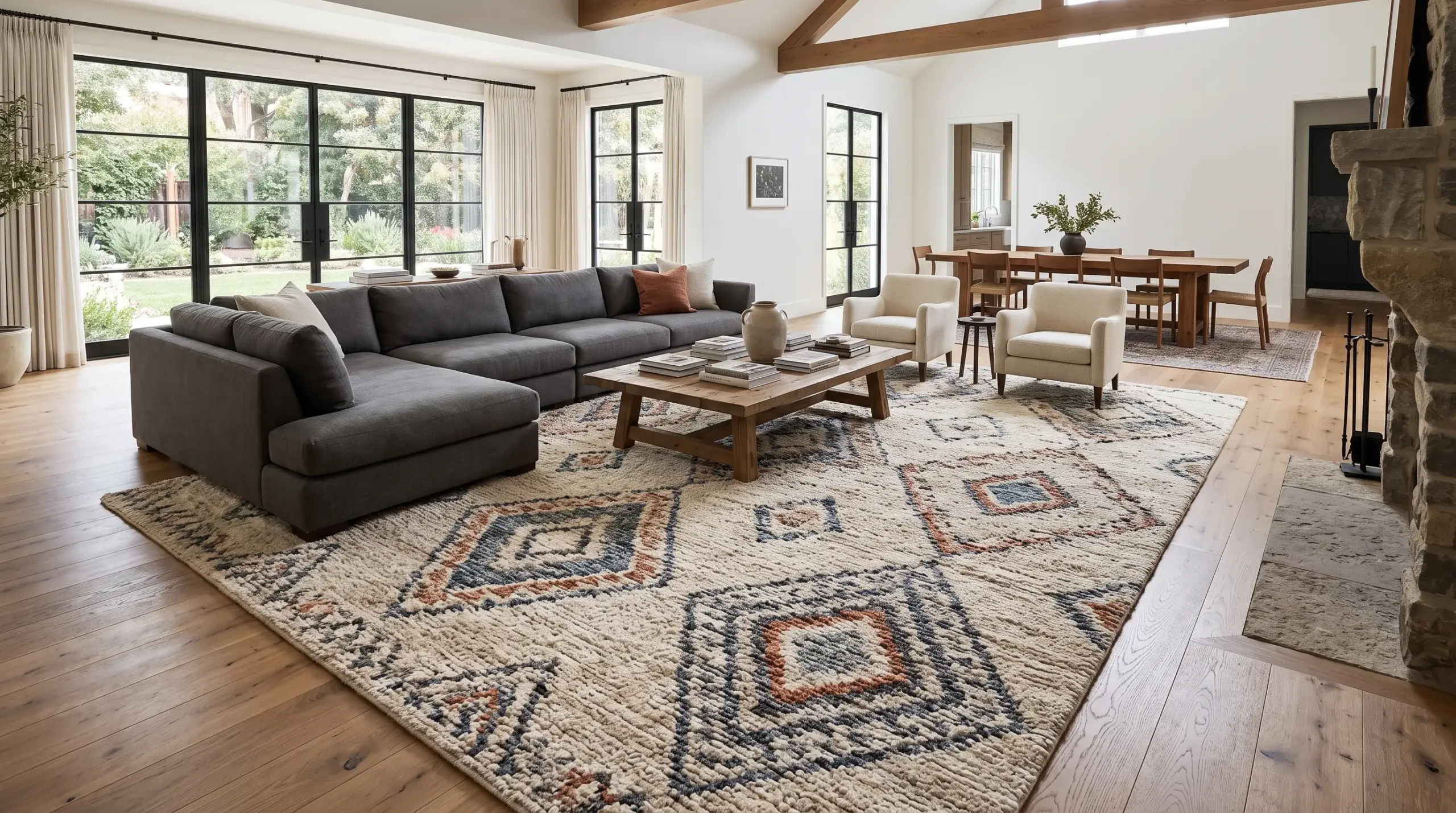
A larger, correctly proportioned rug can visually bring the sofa, coffee table and surrounding seating together. Instead of breaking the room into small sections, it creates one cohesive zone.
You do not necessarily need a rug that covers the entire floor. The objective involves choosing a size that relates to your furniture arrangement. Ideally, at least the front legs of the main sofa and chairs can sit on the rug. This helps establish a clear seating area while maintaining enough visible flooring around the perimeter.
Choosing Big Rugs for Living Room in Dubai Apartments
When searching for big rugs for living room in Dubai apartments, focus on proportion rather than simply choosing the largest available option.
A larger rug can work especially well in an open-plan apartment where the living room connects directly to a dining or kitchen area. It can visually define the living zone without requiring a physical partition or additional furniture.
Place the rug so that it anchors the primary seating arrangement. For many layouts, positioning the front legs of the sofa on the rug creates a more integrated appearance. If the room allows enough space, chairs and side tables can also partially sit within the rug’s boundaries.
For a smaller apartment, choose a rug with a relatively simple pattern and a colour that complements the flooring. Excessively busy designs can compete with furniture and make the room feel visually crowded.
The rug should also suit Dubai’s practical conditions. Consider dust, foot traffic and cleaning requirements when selecting materials and pile heights. A beautiful rug that becomes difficult to maintain can quickly lose its appeal in everyday apartment living.
When a Beige Carpet in Dubai Can Make a Space Feel Larger
A beige carpet in Dubai can help create a softer and more continuous visual foundation, particularly when its tone closely complements the walls and larger furniture pieces.
Warm beige shades work well with many contemporary Dubai interiors because they add warmth without introducing a strong colour boundary. When the carpet, walls and major furnishings sit within a similar tonal family, the eye can move through the room more easily.
This approach can work particularly well in bedrooms, family rooms and areas where you want a comfortable, quiet atmosphere. Pairing beige carpet with light-coloured furniture and minimal contrast can strengthen the spacious effect.
However, practicality matters. Dubai homes can experience dust and frequent foot traffic, so consider stain resistance, cleaning requirements and the carpet’s pile when making your selection. A low-maintenance material with an appropriate texture can provide the desired visual effect without creating unnecessary upkeep.
If you prefer a removable option, a large neutral rug can create a similar sense of continuity while giving you more flexibility to change the interior later.
What About Outdoor Rugs in Dubai?
Small Dubai apartments often include balconies that can function as valuable extensions of the living area. Instead of leaving this space empty or filling it with oversized furniture, an appropriately sized outdoor rug can help create a defined seating or relaxation zone.
Outdoor rugs in Dubai need to handle conditions that differ from those inside the apartment. Strong sunlight, dust, temperature changes and occasional moisture can affect unsuitable materials. Look for options designed for outdoor use and consider easy-clean construction when selecting a rug for your balcony.
A simple neutral outdoor rug can also connect the balcony visually with the adjoining living room. When the colours and textures complement the interior, the transition between indoor and outdoor areas can feel more seamless.
Keep the balcony layout open. Pair the rug with compact furniture, such as a small bistro set, slim lounge chairs or a narrow bench, rather than filling the entire area with bulky pieces. Leaving some visible floor around the rug and furniture can make the balcony feel more spacious.
For Dubai apartments with limited outdoor space, the same principle applies indoors: define the area without overcrowding it. A well-proportioned rug can add comfort and personality while helping a small space feel intentional rather than cramped.
4. Make the Floor Look More Spacious
Choose Flooring With Long, Continuous Visual Lines
Flooring can strongly influence how large or compact an apartment feels. When the same flooring flows through connected spaces, the eye can travel across the room without encountering unnecessary visual interruptions. This continuity can make the overall apartment feel more open.
Pay attention to the direction of flooring planks. In a narrow room, placing planks along the longer dimension can help emphasise the room’s length. In open-plan apartments, maintaining a consistent flooring style across the living, dining and hallway areas can create a stronger sense of connection.
Try to avoid excessive transitions between materials unless they serve a practical or design purpose. Multiple flooring colours, patterns or abrupt changes can divide a compact apartment into visually separate sections.
Light and medium-toned flooring can also complement the spacious effect created by a neutral colour palette. When the floor, walls and larger furniture pieces work within a coordinated colour family, the room feels less fragmented and more cohesive.
Consider Engineered Wood for a Warm, Spacious Look
If you want a natural, premium appearance without making the floor visually heavy, light-toned engineered wood can work particularly well. Its natural grain adds warmth and texture while maintaining a relatively clean visual foundation.
Choose plank colours that complement your walls and furniture rather than creating strong contrast. A light oak or similarly soft wood tone can work beautifully with cream, beige, greige and warm-white interiors.
The plank layout also matters. Longer boards and a consistent installation direction can help guide the eye through the apartment. In an open-plan layout, carrying the same engineered wood finish through multiple connected areas can create a more unified appearance.
Kustom Space provides engineered wood flooring solutions for Dubai interiors, allowing homeowners to select finishes that balance appearance, comfort and everyday functionality. Professional planning also helps ensure that the flooring works with the apartment’s existing doors, furniture, lighting and overall interior scheme.
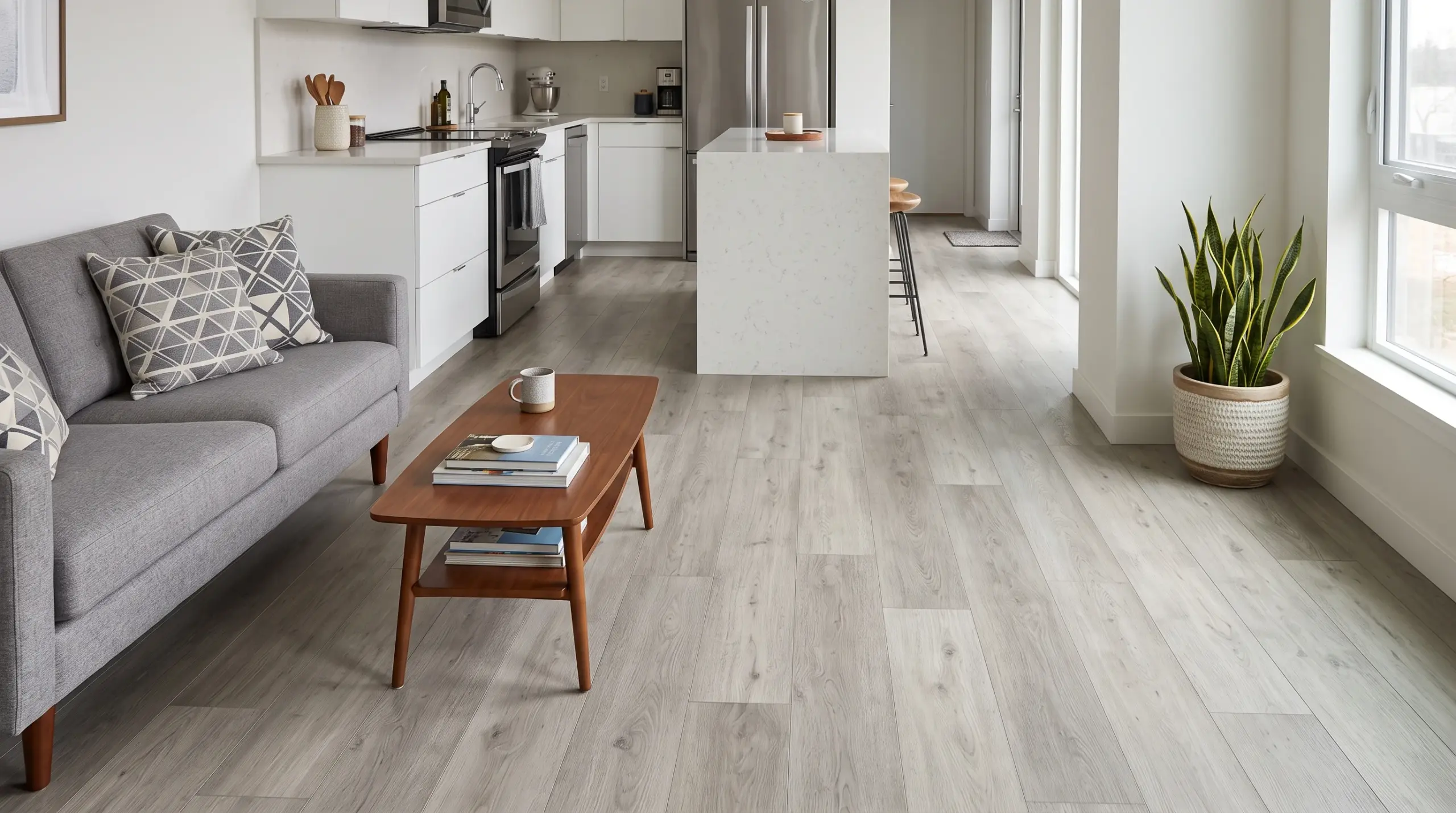
Consider SPC Flooring for Practical Dubai Apartment Interiors
For busy households, SPC flooring can offer a practical alternative when durability and easy maintenance matter alongside appearance. Its clean surface and wide range of finishes make it suitable for contemporary apartment interiors.
SPC flooring can also help create visual continuity. Using one coordinated finish across the living room, dining area and hallway can prevent these spaces from feeling unnecessarily divided.
Choose a light or medium finish that complements the rest of your interior rather than selecting a colour solely because it looks attractive in a sample. Consider how it will interact with natural daylight, furniture, wall colours and rugs.
Maintenance also matters in Dubai. Dust and everyday foot traffic can quickly become noticeable on floors, so selecting a practical surface that fits your cleaning routine can make the apartment easier to manage.
Whether you choose engineered wood, SPC or another flooring solution, focus on creating a continuous visual foundation. The floor should support the room rather than compete with the furniture and decorative elements.
5. Select Furniture Based on Scale, Not Just Style
Choose Slim-Profile Furniture
A beautiful sofa or dining table can still make a small apartment feel cramped if its proportions do not suit the room. When selecting furniture, consider its physical footprint and visual weight alongside its style.
Raised-leg sofas can work particularly well because they leave some of the floor visible underneath. That additional visibility creates a lighter appearance and allows the flooring to continue visually beneath the furniture.
Narrow armchairs can provide comfortable seating without occupying as much space as oversized lounge chairs. Similarly, compact dining tables can provide sufficient functionality without dominating an open-plan living area.
Look for furniture with clean silhouettes and proportions that match the room. Thin legs, streamlined arms and simple profiles can make a noticeable difference when floor space remains limited.
You can also consider furniture that serves multiple purposes. An ottoman can provide seating, a footrest and hidden storage, while a console can provide a useful surface without taking the footprint of a larger cabinet.
The objective does not involve choosing the smallest furniture available. Instead, choose pieces that provide the functionality you need while leaving enough visible floor and circulation space around them.
Avoid Filling Every Corner
One of the easiest ways to make a small apartment feel crowded involves trying to use every available corner. Empty space does not represent wasted space. It gives the eye room to move and helps important furniture and decorative features stand out.
Before adding another chair, side table, cabinet or decorative object, consider whether the room actually needs it. A carefully edited interior often feels more sophisticated than one filled with numerous smaller pieces.
Negative space can also improve movement. Keep the main walkways clear and avoid placing furniture directly in front of doors, balcony entrances or frequently used pathways.
Instead of filling an awkward corner with a random piece of furniture, consider whether you can use a more purposeful solution. A slim floor lamp, tall plant, compact artwork or built-in storage feature may provide more value without making the room feel overloaded.
For Dubai apartments, this approach works particularly well when you want a premium look without excessive visual clutter. Fewer, better-selected pieces can create a stronger design statement while preserving the openness that makes a compact home feel comfortable.
When furniture, flooring and window treatments work together, the apartment can feel significantly larger without changing its actual dimensions. The secret lies in controlling visual weight, maintaining clear sightlines and giving each piece enough space to breathe.
Use Multi-Functional Furniture
Furniture that performs more than one function can help you get more value from every square metre in a compact Dubai apartment. Instead of adding separate pieces for storage, seating and everyday use, choose designs that combine several practical functions.
A storage bed can provide valuable space for bedding, seasonal items, luggage and other belongings without taking additional floor space. This option works particularly well in smaller bedrooms where a large wardrobe or extra storage cabinet may restrict movement.
In living and dining areas, an extendable dining table can remain compact during everyday use and provide additional seating when guests arrive. You can apply the same principle to nesting tables, which allow you to separate or stack smaller tables depending on how much surface space you need.
Ottomans with hidden storage can also serve as seating, footrests and practical storage units. Choose upholstery that complements your sofa and curtains so the piece becomes part of the overall design rather than another visually separate object.
The goal involves reducing the number of individual items without reducing functionality. This approach can help a small apartment feel less cluttered while still supporting everyday life and entertaining.
Consider Custom Furniture for Awkward Apartment Layouts
Ready-made furniture often comes in standard dimensions that may not suit every Dubai apartment. An unusually narrow wall, unused corner, structural column or low-clearance area can leave valuable space difficult to use.
Made-to-measure furniture provides a way to design around these limitations. A custom cabinet can fit precisely into an awkward corner, while floor-to-ceiling storage can make better use of vertical space without expanding the furniture’s footprint.
Custom solutions can also help you coordinate several functions within one design. For example, a built-in unit might combine closed storage, open shelving, a work surface and decorative display space. This can reduce the need for several separate furniture pieces.
Kustom Space’s approach to custom furniture focuses on creating solutions that suit the dimensions, lifestyle and visual character of the home. For more insight into why many Dubai homeowners choose bespoke pieces, explore the guide on custom furniture in Dubai.
For compact apartments, the biggest advantage often comes from using space that standard furniture cannot fully exploit. Corners, vertical walls and narrow gaps can become useful storage or functional zones when you design them around the actual room dimensions.
6. Make the Bedroom Feel Bigger Without Removing Storage
Choose a Custom Bed That Matches the Room
The bed usually represents the largest piece of furniture in a bedroom, so its proportions can have a major effect on how spacious the room feels. Instead of choosing a large design simply because it looks luxurious in a showroom, consider the actual dimensions of your bedroom.
A well-planned custom bed in Dubai can match the available floor area while incorporating features that support your storage needs. You can adjust the headboard depth, overall frame dimensions and storage configuration to suit the room.
A streamlined headboard can also reduce visual bulk. Consider a simple upholstered or integrated design instead of an oversized structure that extends far beyond the mattress.
Storage underneath the bed can further reduce the need for additional cabinets. By keeping belongings out of sight, you can maintain cleaner floor space and make the bedroom feel more organised.
The objective is not to make the bed as small as possible. Instead, choose proportions that leave comfortable circulation space around it while providing the sleeping comfort and storage capacity you need.
Use a Customised Bed for Small Bedroom Layouts
A customised bed dubai in dubai solution can work particularly well when the bedroom has an unusual shape or limited storage. Instead of forcing standard furniture into the available space, you can plan the bed around the room’s actual dimensions.
For example, a custom design can incorporate drawers beneath the mattress, side storage compartments or an integrated headboard with shelves. These features can reduce the need for separate bedside cabinets and storage units.
You can also coordinate the bed’s finish with the wardrobe, flooring and wall colours. A cohesive palette helps the furniture blend into the room rather than creating several competing visual blocks.
For particularly compact bedrooms, consider designs that combine storage with vertical elements. An integrated headboard can provide shelving or lighting without taking additional floor space, while built-in storage can make use of otherwise unused wall areas.
Keep Bedside Furniture Compact
Large bedside tables can quickly consume valuable floor space on either side of the bed. If the bedroom feels tight, replace bulky cabinets with more compact alternatives.
Floating nightstands can provide a useful surface while leaving the floor underneath visible. This creates a lighter appearance and makes cleaning easier.
Narrow side tables can provide enough space for a lamp, phone and a few essentials without extending too far into the walkway. You can also use wall-mounted lighting instead of table lamps to free up the bedside surface.
Keep these elements visually simple. When the area around the bed remains clear, the room can feel more spacious even when you maintain all the essential bedroom functions.
Use Mirrors and Vertical Storage Strategically
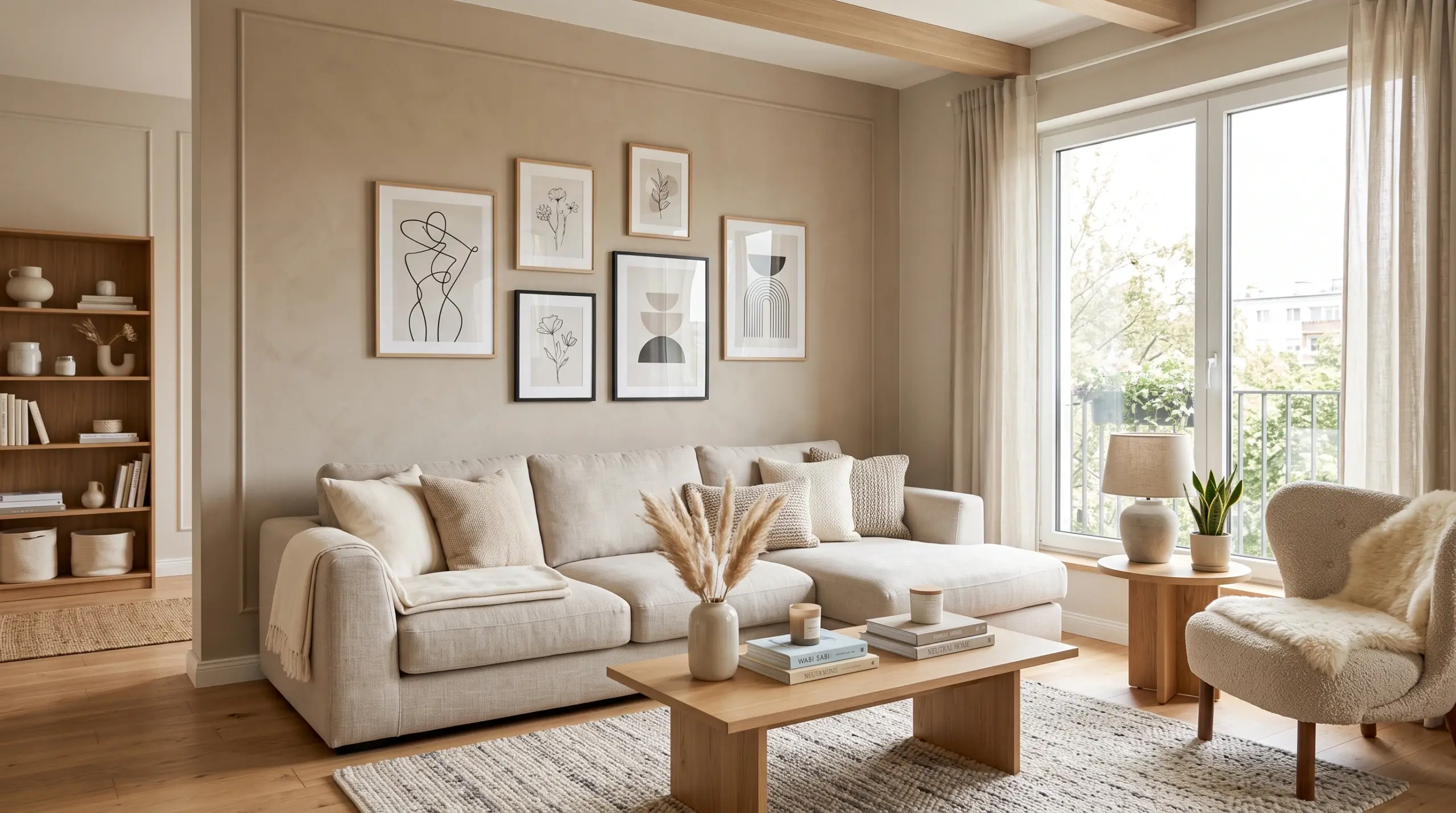
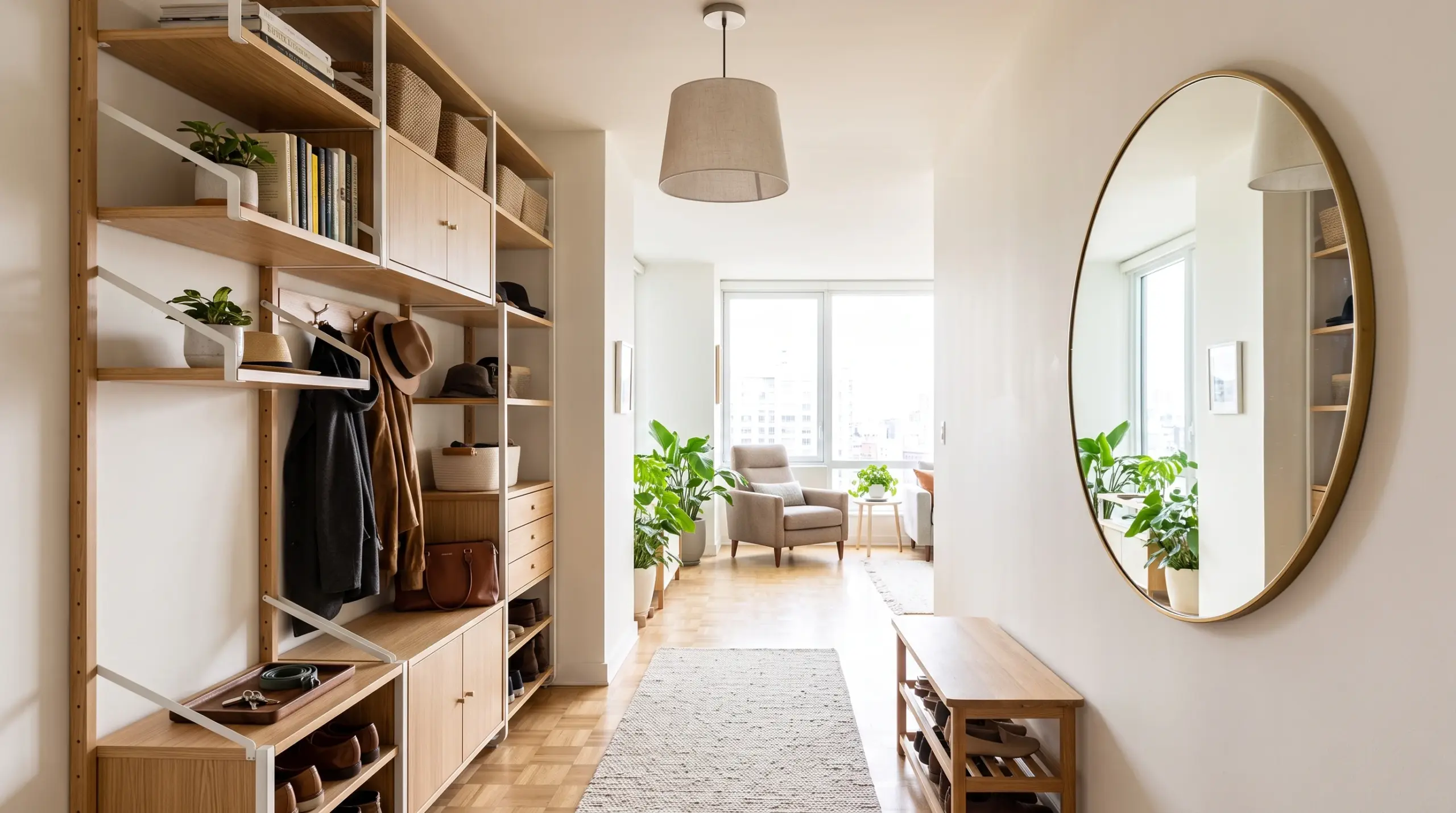
Mirrors can add visual depth by reflecting light and portions of the room. A large mirror placed thoughtfully opposite or near a window can make the bedroom appear brighter and create the impression of additional depth.
Full-height wardrobes can provide another useful solution. They maximise vertical storage while reducing the need for several smaller cabinets. In a compact bedroom, one well-designed full-height wardrobe can look cleaner than multiple separate storage pieces.
Mirrored wardrobe doors can further enhance the sense of openness, particularly when they reflect natural daylight or a visually attractive part of the room. However, avoid covering every available surface with mirrors. Too many reflective elements can create visual noise rather than making the space feel calmer.
Keep the wardrobe finish, bed, walls and flooring within a coordinated palette. When large bedroom elements share complementary tones, the room feels more cohesive and the storage becomes less visually dominant.
The best small-bedroom design combines hidden storage, appropriate furniture proportions and clear sightlines. You can maintain plenty of storage without allowing cabinets and furniture to take over the room.
7. Create a Dedicated Kids’ Study Area Without Losing Floor Space
Choose a Compact Study Table for Kids
A dedicated study area can help children focus without requiring an entire room. In a compact Dubai apartment, choose a desk that matches the child’s needs and the available floor area rather than selecting an oversized workstation.
When choosing a study table for kids in Dubai, consider the desk height, width and depth. A compact rectangular desk can work well against a bedroom wall, while a narrow desk can fit into a hallway niche or unused corner.
Position the desk near a source of natural light where practical, but avoid placing it directly in front of a window if strong afternoon sunlight creates glare. A combination of natural daylight and focused task lighting can create a more comfortable study environment.
Keep the surrounding area visually simple. The fewer unnecessary items you place around the desk, the easier it becomes to maintain a clear study zone.
Pair the Desk With the Right Kids’ Chair
The chair should match the desk in both scale and functionality. An oversized chair can consume unnecessary floor space, while an unsuitable height can make the study area uncomfortable for a child.
When looking for a kids desk chair in Dubai, consider adjustability, appropriate seat height, back support and the amount of space the chair needs when the child moves in and out.
For a compact room, choose a chair with a streamlined profile that can slide neatly under the desk. This keeps the floor area clearer when the workstation remains unused.
Also consider the overall colour and material of the chair. A chair that complements the desk and surrounding furniture will blend into the room more effectively than one with a highly contrasting design.
Use a White Study Table to Keep the Area Visually Light
A white study table in Dubai can work particularly well when you want a children’s workspace to feel bright without adding visual weight.
White and other light finishes reflect more light visually and can make a compact study corner feel cleaner and more open. Pair the desk with light-coloured walls, simple shelving and a chair in a complementary neutral tone for a cohesive appearance.
You can still introduce colour through stationery, artwork, storage boxes and accessories. This approach gives children a more playful environment without making the main furniture visually dominant.
If the study area shares space with a bedroom or living area, a light desk can also blend more easily into the existing interior rather than appearing as a separate bulky furniture zone.
Add Storage to Keep School Supplies Off the Floor
Clutter can make a small study area feel significantly smaller. Books, stationery, school bags and craft materials can quickly occupy the floor and desk surface if the workstation lacks sufficient storage.
A kids study table with storage in Dubai can solve this problem by combining the work surface with drawers, shelves or integrated compartments. You can keep frequently used supplies within easy reach while storing less frequently used items elsewhere.
Vertical storage can provide additional capacity without taking more floor space. Wall-mounted shelves, pegboards and narrow cabinets can make use of the area above the desk.
Keep some compartments closed to hide visual clutter and leave a few open shelves for books or carefully selected decorative items. This balance can make the study area practical without making it feel crowded.
8. Use Mirrors to Reflect Light and Increase Visual Depth
Place Mirrors Opposite or Near Windows
Mirrors can create the perception of additional space by reflecting light and parts of the room. In a Dubai apartment with good natural daylight, positioning a mirror near or opposite a window can help distribute that light visually across the interior.
A large mirror can also reflect an attractive view, a well-designed wall or an open section of the room. This can create greater visual depth and make the space appear less enclosed.
Think carefully about what the mirror will reflect before installing it. A mirror that faces clutter, a crowded storage unit or an unattractive wall can simply duplicate the visual problem.
Use One Large Mirror Instead of Several Small Ones
Several small mirrors can create multiple visual interruptions. While a gallery arrangement can look decorative, it may not deliver the same spacious effect as one larger, strategically positioned mirror.
A large mirror creates a more continuous reflection and can make a wall appear visually deeper. Full-height mirrors can work particularly well in bedrooms, dressing areas and narrow hallways.
Choose the size according to the room rather than simply selecting the largest mirror available. Leave enough surrounding wall space for the mirror to feel intentional rather than cramped between other decorative objects.
Choose Mirror Styles That Match the Apartment’s Interior
The frame and shape of the mirror should complement the apartment’s overall design. Minimalist frameless mirrors can work well in contemporary interiors where you want the reflection to remain the main feature.
Framed mirrors can add warmth and character, while full-height mirrors can emphasise vertical proportions. Decorative mirrors can become a focal point in a living room, provided their design does not overwhelm the surrounding space.
For small apartments, avoid combining too many different mirror styles. One well-positioned statement mirror often creates a stronger effect than several competing reflective surfaces.
9. Use Vertical Space Instead of Taking More Floor Space
Install Full-Height Storage
When floor space remains limited, look upward. Walls provide valuable storage potential without requiring additional floor area.
Floor-to-ceiling cabinetry can provide substantial concealed storage while creating a clean, integrated appearance. Tall shelving can provide another option for books, accessories and decorative pieces.
Built-in wardrobes can make particularly effective use of bedroom walls. Instead of leaving unused space above a standard wardrobe, a full-height design can extend storage almost to the ceiling.
Keep the finish relatively simple and coordinate it with the walls where possible. This helps large storage units blend into the architecture instead of becoming visually dominant.
Draw the Eye Upward
Vertical elements can influence how you perceive the height of a room. Tall curtains, vertical shelving, elongated artwork and full-height doors can all encourage the eye to travel upward.
Floor-to-ceiling curtains can make windows appear taller, while tall shelving can turn an otherwise empty wall into a functional feature without consuming much additional floor space.
Artwork can also contribute to this effect. Instead of filling a wall with many small frames, consider one or two taller pieces that complement the room’s proportions.
These techniques work particularly well when you combine them. For example, full-height curtains, tall storage and a consistent wall colour can create a stronger sense of vertical continuity.
Keep the Lower Half of the Room Visually Open
While vertical storage makes excellent use of wall space, avoid covering every wall with bulky low-level furniture. Too much cabinetry across the lower half of a room can make the apartment feel enclosed.
Choose selected areas for substantial storage and leave other sections open. Furniture with raised legs can also help maintain visible floor area beneath the pieces.
Clear sightlines matter as well. Avoid positioning tall furniture where it blocks the view between key areas of the apartment. Maintaining some visual connection between the living room, dining area and balcony can make the entire space feel more open.
The aim involves moving storage upward while preserving openness at floor level.
10. Create a Small Home Office Without Making the Apartment Feel Crowded
Choose Compact Home Office Furniture
Working from home does not require a dedicated office room. With careful planning, you can create a functional workstation within a bedroom, living room or unused corner.
When selecting home office furniture in Dubai, prioritise slim desks, appropriately sized ergonomic chairs and integrated storage. A desk that fits precisely into the available wall space can provide a much better solution than trying to accommodate a large traditional office setup.
Consider a wall-mounted or narrow-profile desk where appropriate. Shelving above the desk can provide storage without expanding the workstation’s footprint.
Keep cables organised and minimise unnecessary desktop accessories. A clean workstation occupies less visual attention and helps the surrounding room maintain a spacious appearance.
Use Office Furniture Strategically in Multipurpose Rooms
A compact workstation can serve several purposes when you integrate it thoughtfully into the apartment layout.
A dining area can incorporate a small workstation at one end, allowing the same zone to support meals and occasional work. A bedroom corner can accommodate a narrow desk for focused tasks without requiring a separate office. A living room niche can also become a compact office when you use furniture that complements the surrounding interior.
Choose furniture that visually belongs to the room. A desk that matches the wood finish or colour palette of nearby furniture can blend into the interior more naturally.
For professionals who occasionally work from home, this approach provides functionality without permanently dedicating a large portion of the apartment to office use. When the workstation remains compact and organised, the apartment can retain its residential character while supporting modern working habits.
What to Look for When Choosing Office Furniture for Sale in Dubai
When comparing office furniture for sale in Dubai, do not focus only on the price tag. A cheaper desk can become an expensive mistake if it takes up too much floor space, lacks storage or does not suit the way you work.
Start with scale. Choose a desk that provides enough workspace without dominating the room. Slim desks, compact filing units and appropriately sized chairs can create a functional workstation while preserving circulation space.
Storage also deserves careful consideration. A desk with drawers, a narrow cabinet or wall-mounted shelving can reduce the need for additional storage furniture. This keeps more of the floor visible and makes the room easier to organise.
Flexibility matters in a small apartment. Look for furniture that can serve different purposes or move easily when you need to change the room layout. A compact desk might function as a work surface during the day and a study area at another time.
Finally, consider visual weight. Furniture with simple profiles, lighter finishes and open sections can appear less imposing than bulky, dark pieces. Choose office furniture that supports your work without making the apartment feel like a commercial office.
11. Declutter With Smart Storage and Better Layout Planning
Give Every Item a Dedicated Storage Location
Clutter can make even a well-proportioned apartment feel smaller. When everyday items remain on tables, floors and open shelves, they create numerous visual distractions and reduce the sense of available space.
Give frequently used belongings a defined storage location. Use drawers, cabinets, baskets and built-in compartments to keep smaller items organised.
Concealed storage works particularly well in compact homes because it keeps visual surfaces clean. You can display a few carefully selected decorative pieces while storing less attractive everyday items behind doors.
Do not underestimate simple organisation. A clear coffee table, tidy entryway and uncluttered kitchen counter can immediately make an apartment feel more spacious.
Keep Walkways Clear
Good traffic flow can change how you experience a small apartment. If furniture blocks the natural route between the entrance, living area, kitchen and balcony, the space can feel cramped regardless of its actual dimensions.
Create clear paths around major furniture pieces. Avoid placing chairs where they obstruct doors, and keep balcony entrances easy to access.
Pay particular attention to windows. Large furniture positioned directly in front of a window can block daylight and reduce the visual connection with the outdoors.
You do not need to push every piece of furniture against a wall. Sometimes creating a small amount of breathing room around furniture can improve circulation and make the overall arrangement feel more intentional.
Use Built-In Storage in Unused Corners
Unused corners provide valuable opportunities for storage. An under-window cabinet can provide additional space without taking over an entire wall, while a narrow hallway unit can organise shoes, bags and everyday essentials.
Entryways often benefit from compact built-in storage because they can quickly become cluttered with footwear, keys and accessories. A tailored cabinet can use the available dimensions more effectively than a standard piece.
Bedroom niches also provide opportunities for custom wardrobes, shelving or dressing areas. Instead of leaving awkward gaps around standard furniture, use those dimensions to create storage that fits the room.
Built-in storage can also reduce the number of standalone furniture pieces. This creates cleaner sightlines and allows the architecture of the apartment to remain visible.
12. Use Lighting to Make a Small Dubai Apartment Feel Larger
Maximise Natural Light During the Day
Natural light can make a compact apartment feel brighter and more open. Keep windows as visually unobstructed as practical and choose window treatments that provide privacy and glare control without making the room feel enclosed.
Sheer curtains can soften strong daylight while maintaining a bright atmosphere. Roller blinds and other streamlined treatments can provide additional control when direct sunlight becomes uncomfortable.
Avoid using heavy curtains throughout the day if the room already receives limited natural light. Instead, choose a flexible window-treatment combination that allows you to open the space fully when you want maximum daylight.
For Dubai apartments with strong sun exposure, balance remains important. You want enough daylight to create openness while controlling glare and heat when necessary.
Layer Ambient, Task and Accent Lighting
One light source rarely creates the best atmosphere in a small apartment. Layering different types of lighting can add depth and prevent the room from appearing flat.
Ambient lighting provides general illumination through ceiling fixtures or other broad light sources. Task lighting supports specific activities, such as reading, cooking or working at a desk.
Accent lighting can highlight artwork, shelving, architectural details or decorative features. Wall lights, floor lamps, table lamps and under-cabinet lighting can all contribute to a more flexible lighting scheme.
Place lighting at different heights to encourage the eye to move through the room. This can create a stronger sense of depth while allowing you to adjust the atmosphere according to the time of day.
Avoid Relying on One Harsh Ceiling Light
A single bright ceiling fixture can illuminate the entire apartment, but it may not create a comfortable or visually layered environment.
Instead, combine general lighting with smaller sources around the room. A floor lamp beside a sofa, wall lighting near artwork or under-cabinet lighting in a kitchen can create separate pools of light.
This approach can make different areas feel intentional without requiring physical partitions. In an open-plan apartment, lighting can even help define the living, dining and working zones while keeping the overall layout visually connected.
13. Avoid These Common Small-Apartment Interior Design Mistakes
Using Furniture That Is Too Large
Oversized sofas, deep cabinets and bulky dining tables can consume valuable floor space. Choose furniture based on the room’s actual dimensions and maintain enough clearance for comfortable movement.
Choosing Too Many Dark or Contrasting Colours
Strong contrasts can divide a compact room visually. Use darker colours strategically as accents rather than covering every major surface with competing tones.
Covering Windows With Heavy Treatments
Large, heavy curtains can make windows appear smaller and reduce the room’s visual openness. Choose lightweight or streamlined treatments where appropriate.
Using Too Many Small Decorative Items
Numerous ornaments, frames and accessories can create visual clutter. Select fewer statement pieces and give each one enough surrounding space to stand out.
Choosing Rugs That Are Too Small
A tiny rug can create a disconnected island beneath the coffee table. Choose a rug that relates to the complete seating arrangement and helps unify the area.
Blocking Natural Light With Tall Furniture
Avoid placing large cabinets or shelving units directly in front of windows unless the layout requires it. Preserve important sources of natural light and outdoor views.
Creating Too Many Different Flooring Transitions
Multiple flooring materials can visually divide an apartment into small sections. Where practical, use coordinated flooring across connected areas to create greater continuity.
Can These Ideas Work During a Larger Dubai Apartment Renovation?
When a Simple Interior Refresh Is Enough
You do not always need a full renovation to make an apartment feel larger. Curtains, blinds, rugs, furniture, mirrors and lighting can produce a noticeable visual improvement without changing the structure.
Start with the elements that create the most visual impact. Replacing bulky window treatments, improving furniture proportions, introducing a larger rug or reorganising storage can transform the feel of a room.
A coordinated colour palette can also connect these changes. When the new curtains, flooring, furniture and accessories complement one another, the apartment can feel more cohesive without requiring extensive construction.
When Custom Joinery or Renovation Makes More Sense
Sometimes furniture and decoration cannot solve the underlying problem. Poor layouts, insufficient storage, awkward niches, outdated flooring or inefficient kitchens and bathrooms may require a more comprehensive approach.
Custom joinery can help address awkward dimensions and provide storage that standard furniture cannot deliver. A renovation can also improve the layout, finishes and functionality of the apartment at the same time.
If several areas need attention, a coordinated interior renovation can provide better results than making isolated changes over time. Professional planning helps ensure that flooring, furniture, lighting, window treatments and architectural elements work together.
From Apartment Refreshes to Penthouse Renovation in Dubai
The same design principles can apply to properties at very different scales. A compact apartment needs careful control of visual weight and circulation, while a luxury property needs thoughtful zoning and proportion.
A Penthouse renovation in Dubai can use continuous flooring, carefully positioned furniture, layered lighting, expansive window treatments and custom joinery to create visual flow across larger spaces.
The goal changes with the property size, but the underlying principle remains the same: every element should support the architecture rather than compete with it.
A premium interior does not depend on filling a large space with furniture. It depends on proportion, material quality, lighting, functionality and a clear design direction.
Why Choose Kustom Space for Small Apartment Interior Design in Dubai?
Complete Interior Solutions Under One Roof
Kustom Space can help coordinate the key elements that influence how spacious an apartment feels, including curtains, blinds, flooring, carpets and rugs, furniture, wallpaper and renovation or fit-out solutions.
Managing related elements through one interior design partner can make it easier to maintain consistency across colours, materials and proportions.
Instead of choosing each product independently, homeowners can develop a more cohesive interior where the flooring complements the furniture, the curtains work with the colour palette and the lighting supports the overall atmosphere.
Designs That Balance Style and Practicality
Small apartments need more than attractive products. Every decision should support everyday living.
Kustom Space can approach an apartment based on its actual layout, available daylight, storage requirements, furniture needs and preferred interior style. This helps create spaces that look refined while remaining comfortable and practical.
For Dubai homeowners, the design also needs to account for strong sunlight, dust, daily use and the desire for interiors that maintain a premium appearance.
Custom Solutions for Different UAE Properties
The principles in this guide can support apartments of different sizes as well as villas, penthouses, offices and commercial spaces.
A compact apartment may need space-saving furniture and carefully planned storage, while a villa may require broader zoning and larger-scale furniture. A penthouse can benefit from bespoke finishes and integrated solutions, while an office may require a stronger focus on productivity and circulation.
Kustom Space can adapt its interior solutions to the property’s dimensions, purpose and design direction across Dubai and the wider UAE.
Frequently Asked Questions About Making a Small Dubai Apartment Look Bigger
What colours make a small Dubai apartment look bigger?
Light neutrals such as warm white, cream, beige, greige and light taupe can make a small apartment feel brighter and more open. Keeping walls, flooring and larger furniture within complementary tones can also create stronger visual continuity.
Do curtains make a small room look bigger?
Yes. Installing curtains higher and wider than the window can make the opening appear larger, while full-length curtains can draw attention upward. Lightweight fabrics can also help preserve natural light.
Are rugs a good idea for small Dubai apartments?
Yes. The right rug can connect a seating arrangement and make the room feel more cohesive. Choose a size that relates to the furniture rather than using a very small rug that visually separates the coffee table from the rest of the seating area.
What type of furniture works best in a small apartment?
Slim-profile, multifunctional, raised-leg and custom-made furniture can work well. Choose pieces that provide the required functionality while preserving circulation space and visible flooring.
Can flooring make a small apartment look bigger?
Yes. Consistent flooring across connected spaces can create visual continuity. Light or medium finishes, carefully planned plank direction and fewer unnecessary transitions can help the apartment feel more connected.
Make Your Dubai Apartment Feel Bigger With Kustom Space
A small apartment does not need to feel limited. With the right combination of light colours, well-positioned curtains and blinds, appropriately sized rugs, continuous flooring, multifunctional furniture, smart storage, mirrors and layered lighting, you can create a home that feels brighter, calmer and more spacious.
The most effective approach does not involve adding more to the room. It involves making better decisions about what the room needs and giving each element enough space to work.
Whether you want to refresh a single apartment room or plan a complete interior transformation, Kustom Space can help you bring the different elements together. From custom curtains and blinds to flooring, carpets, furniture, wallpaper and renovation solutions, the team can help create an interior that balances your personal style with practical UAE living.
Contact Kustom Space via WhatsApp to discuss your apartment, explore suitable materials and finishes, or request guidance for your next interior design or renovation project across Dubai and the UAE.