
Turnkey Interior Design & Fit-Out Services Dubai
 What Turnkey Interior Design Actually Means in Dubai
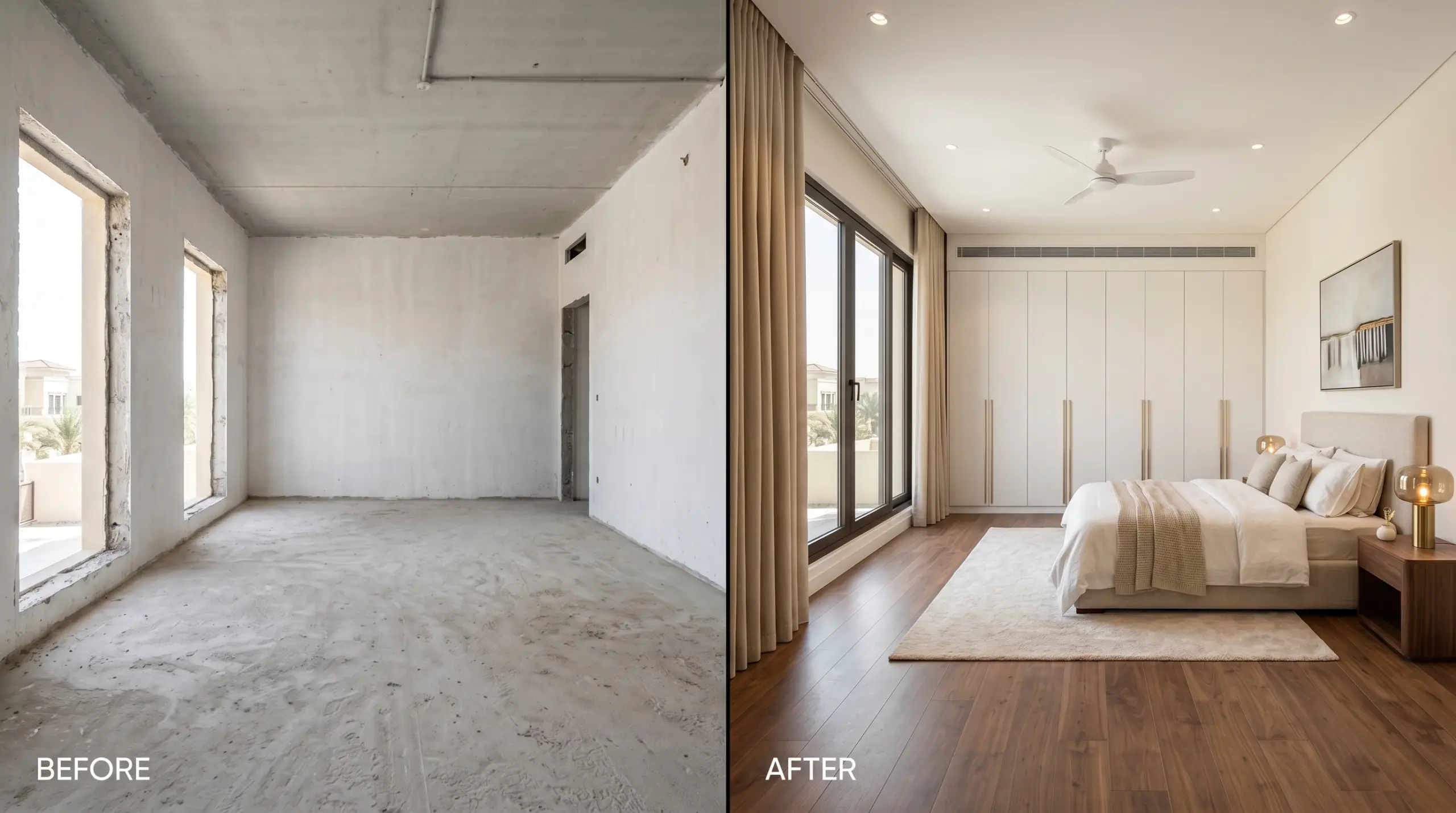
When you partner with a provider that delivers true turnkey interior design & fit-out services, Dubai clients expect a seamless, end-to-end transformation. In this model, a single team manages every detail under one roof from initial spatial
planning and approvals to final styling. Knowing exactly what a contractor includes in their definition of “turnkey” is the first step to ensure they deliver your project on time, on budget, and exactly to your vision.
As reported by Gulf News, the region’s property boom has heavily accelerated the demand for integrated, all-in-one property solutions. A genuine turnkey interior design and fit-out service covers design
consultation, space planning, material selection, procurement, project scheduling, installation, and final snagging all under one contract with one point of accountability. The homeowner receives a completed, ready-to-occupy space at handover. Nothing
is left for them to chase or coordinate after the fact.
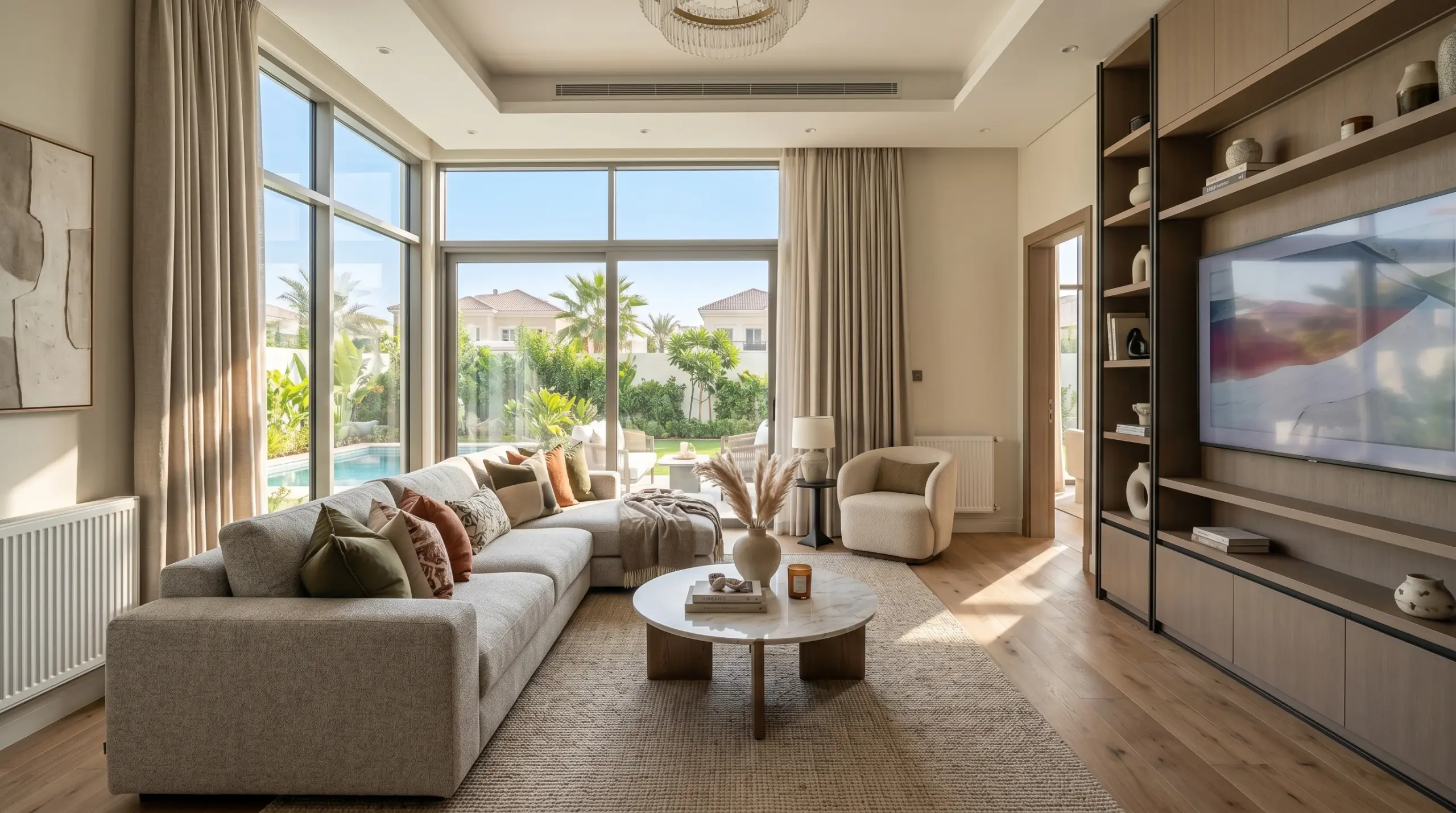
In Dubai’s residential market, this model suits villa owners in Arabian Ranches, Jumeirah Village Circle, and Al Barsha particularly well. These properties typically require work across multiple categories simultaneously flooring in the living areas,
custom curtains or wave S-fold curtains throughout, fitted wardrobes in the bedrooms, and sometimes full kitchen or bathroom renovation and the scheduling dependencies between trades make independent contractor management genuinely difficult. A turnkey
provider resolves this by owning the sequencing.
The commercial fit-out market follows the same logic. Office fit-outs in Business Bay and DIFC require coordination between electrical, joinery, flooring, and soft furnishing teams within landlord-approved working hours, often under a fixed handover deadline
tied to a lease commencement date. A fragmented contractor model almost never survives that kind of constraint.
What Does a Full Fit-Out Service Include?
A complete turnkey fit-out for a Dubai villa or apartment typically covers six core categories. Understanding these upfront prevents the common situation where a homeowner signs with a contractor for “renovation work,” only to discover mid-project that
soft furnishings, window treatments, and flooring require separate suppliers and separate negotiation.
Flooring:
Engineered wood, SPC vinyl, porcelain tile, and carpet each suited to different rooms and humidity levels. For Dubai villas, engineered wood performs significantly better than solid hardwood because it tolerates the temperature differentials between
air-conditioned interiors and the heat that transfers through ground-floor slabs during summer. SPC (stone plastic composite) flooring has become the preferred choice for bathrooms and utility areas because it handles the moisture without warping
or grout failure.
Window Treatments:
Custom curtains, blackout blinds, day-night roller blinds, and sheer panels sized and installed to the exact window dimensions of the property. Off-the-shelf curtains rarely work in Dubai villas because ceiling heights commonly run between 2.8 meters
and 3.4 meters, and windows in newer developments like Emaar Beachfront or Damac Hills are oversized by European standards.
Furniture and Joinery:
Custom-built wardrobes, TV units, kitchen cabinetry, and loose furniture. In a turnkey model, these are designed to the room’s exact dimensions, specified alongside the flooring and wall treatments so finishes align, and manufactured with lead times built
into the project schedule from day one.
Wall Treatments:
Wallpaper, textured paint, feature wall paneling, and decorative finishes. In humid coastal areas like JBR or Dubai Marina, moisture-resistant wallpaper and breathable primers matter more than most homeowners realize until they see bubbling or peeling
after the first summer.
Soft Furnishings:
Cushions, rugs, throws, and decorative accessories that complete a space. These are often treated as an afterthought, but in an end-to-end fit-out they should be specified during the design phase so they arrive with the rest of the installation.
Project Management:
The non-visible but most valuable component. A dedicated project manager who schedules trades, manages supplier deliveries, handles snagging, and communicates progress to the client is what separates a real turnkey service from a contractor who calls
themselves one.
How Much Does a Turnkey Fit-Out Cost in Dubai?
Turnkey interior design and fit-out pricing in Dubai varies significantly based on property size, material grade, and scope. The following ranges reflect typical market rates for residential projects in 2024–2025 and are intended as planning benchmarks,
not fixed quotes.
For a mid-range 3-bedroom villa fit-out covering flooring, curtains, custom joinery, wallpaper, and furniture, expect a total project cost between AED 120,000 and AED 280,000. High-end specifications Italian tile, motorized curtain tracks, solid wood
cabinetry, and premium wallcoverings push this figure into the AED 300,000–600,000 range for the same property size.
Breaking it down by category gives a clearer picture for budgeting:
- Engineered wood flooring installed: AED 85–180 per sq. ft. depending on species and finish
- Custom curtains with tracks: AED 180–380 per meter installed, including fabric, lining, and hardware
- SPC vinyl flooring: AED 35–75 per sq. ft. installed
- Wallpaper supply and installation: AED 25–55 per sq. ft. depending on paper weight and pattern repeat
- Custom wardrobes: AED 1,200–3,500 per linear meter depending on material and interior fitments
- Shaggy or handknitted rugs: AED 800–8,000+ depending on size and origin
These figures are for supply and installation combined. Homeowners who source materials independently and hire installation-only labor almost always spend more in total because of the coordination overhead and the higher error rates that come from mismatched
specifications.
For commercial office fit-outs in areas like DIFC or Al Quoz, per-square-meter costs typically run AED 350–850 for a mid-spec open-plan space, rising to AED 1,000–1,800 for premium finishes with branded joinery, acoustic panels, and full furniture specification.
Why Single-Contractor Fit-Outs Outperform Multi-Supplier Projects in Dubai
This is not an abstract principle. Dubai’s construction and renovation market has structural characteristics that make the single-contractor model measurably more efficient for most homeowners.
Lead times compound when suppliers don’t communicate. A flooring installer arrives before the skirting joiner has finished. The curtain fitter comes when the wall painter is still working on the same room. These delays don’t just add time they add cost,
because trades often charge revisit fees and availability gaps mean some suppliers are booked out for two to three weeks when you need them back.
Material compatibility requires someone to own the specification. In a turnkey fit-out, one team selects flooring, wall color, curtain fabric, and furniture finish together. In a fragmented project, each supplier makes their own recommendation without
visibility of what the others are supplying. The result is often a finished space where the tones clash or the textures fight each other not because any individual product is wrong, but because nobody coordinated the selection.
Warranty and liability are cleaner. When a floor starts lifting six months after installation, a single-contractor model means one entity is accountable. In a multi-supplier project, the flooring company blames the subfloor preparation team, who in turn
blame the HVAC contractor for creating excessive condensation. The homeowner ends up in the middle of a dispute that could last months.
Landlord and developer approval is easier to manage. Dubai villa communities and managed developments require NOC (No Objection Certificate) approval for renovation work. A single contractor handles this paperwork once, with a consolidated scope document.
Multiple contractors means multiple NOC submissions, multiple site access coordination points, and a higher chance of one trade working outside the approved scope.
What Is the Typical Timeline for a Turnkey Fit-Out in Dubai?
A full villa fit-out in Dubai 3 to 4 bedrooms, all rooms in scope realistically requires 8 to 14 weeks from design sign-off to final handover. The range depends on custom manufacturing lead times, material availability, and whether structural work or
MEP changes are involved.
The timeline typically runs as follows:
Weeks 1–2:
Design and specification. Site survey, mood board approval, material selection, and production briefs issued to manufacturers.
Weeks 3–6:
Manufacturing and procurement. Custom joinery, curtains, and upholstered furniture enter production. Flooring materials are ordered and held in the warehouse. This phase runs parallel, not sequential a good project manager keeps all suppliers on
the same start-to-finish schedule.
Weeks 7–10:
Installation. Flooring goes first, then wall treatments, then joinery, then curtains and blinds, then furniture delivery and placement, then soft furnishings. Each trade clears before the next arrives this sequencing is what prevents the coordination
failures described above.
Weeks 11–14:
Snagging and handover. A formal snagging walk-through identifies any installation defects, alignment issues, or specification mismatches. These are resolved before the client signs off. No project of any scale delivers a zero-snag first inspection what
matters is that the snagging process is structured and the resolution timeline is defined upfront.
Ramadan timing note:
If your project runs through Ramadan or Eid Al Adha, build an additional 7–10 days into the manufacturing phase. Most joinery workshops in the UAE reduce working hours during Ramadan, and material deliveries from overseas suppliers slow down around the
Eid holiday period. Planning around this isn’t a problem it’s a routine part of project scheduling in the UAE.
How Do You Choose the Right Fit-Out Company in Dubai?
This is the question most homeowners are actually trying to answer when they search for turnkey interior design and fit-out services in Dubai, and it deserves a direct answer rather than a generic checklist.
Look for a company that manufactures or has direct relationships with manufacturers, not one that purely subcontracts everything. The reason is simple: subcontracted production creates a quality control gap. When a fit-out company has its own workshop
or a fixed manufacturing partner, they can inspect production before delivery and fix problems before they reach your home.
Ask specifically who manages the project day-to-day
Some companies assign a dedicated project manager. Others hand off to a site supervisor once the contract is signed and the design director moves on to the next client. In a city where communication defaults to WhatsApp rather than formal email chains,
having a single named contact who responds promptly makes a material difference to the experience.
Check for a physical showroom in Dubai
Where you can touch and approve materials in person. Color matching and texture selection done via screen or PDF catalogue almost always produces surprises on site. A showroom removes that uncertainty before manufacturing begins.
Ask about their handling of villa community NOCs and developer approvals. An experienced fit-out company in Dubai has done this paperwork dozens of times and knows the specific requirements for Emaar, Nakheel, Meraas, and DAMAC communities. A company
that hesitates or asks you to handle the NOC yourself is signaling a gap in their project management capability.
Finally, ask for references from projects completed in the last 12 months
Specifically in the area and property type matching your own. A company that has fitted out six villas in Damac Hills understands the community-specific requirements, the logistics of getting large furniture into those streets, and the typical snagging
points for those builds. That local knowledge has real value.
What Materials Work Best for Dubai’s Climate in a Full Fit-Out?
Dubai’s climate creates specific material requirements that a turnkey fit-out company should address proactively, not reactively. The combination of extreme summer heat (ambient temperatures above 45°C), intensive air-conditioning, low outdoor humidity,
and high UV exposure creates stresses that materials not designed for the Gulf market handle poorly.
Flooring:
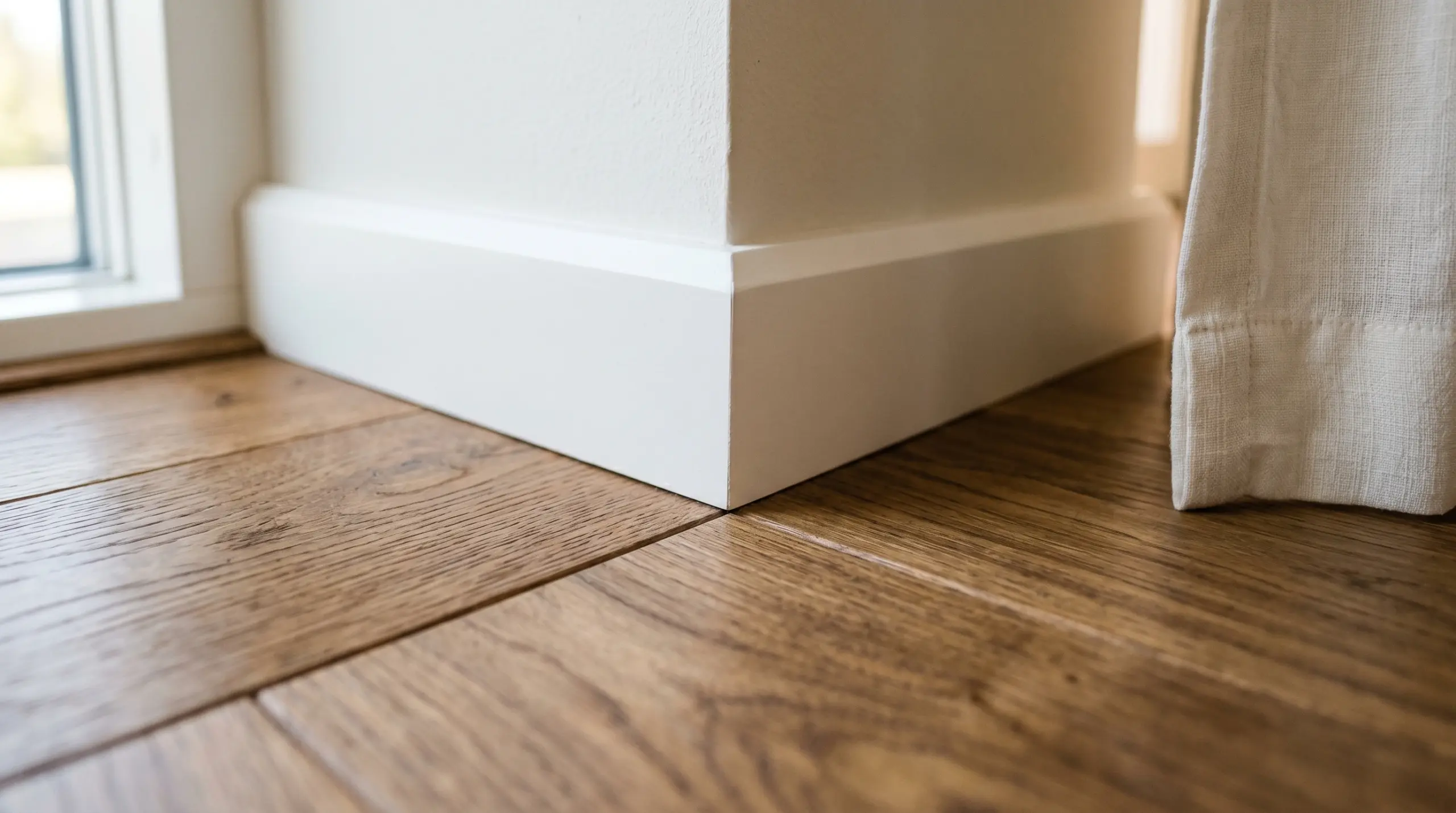
Solid hardwood flooring is not recommended for Dubai villas. The expansion and contraction caused by the air-conditioning cycle rooms that drop to 20°C inside when it is 45°C outside causes solid wood to move seasonally, creating gaps and sometimes cracking.
Engineered wood with a stable core handles this movement significantly better. For wet areas, SPC or large-format porcelain tile with minimal grout lines performs best standard ceramic tile and traditional grout lines trap dust and bacteria in a way
that becomes a maintenance problem within 18 months.
Curtains and blinds:
UV resistance matters more in Dubai than anywhere else in the UK or Europe. Standard European curtain fabrics are not rated for the UV intensity of the Gulf sun, and they fade noticeably within 12 to 18 months on south-facing and west-facing windows.
Specify fabrics with a UV protection factor of UPF 50+ for rooms with direct sun exposure. Blackout curtains for bedrooms should use a triple-weave or foam-backed fabric thin blackout coatings on standard weave fabrics delaminate in Dubai’s heat within
2–3 years.
Wallpaper:
PVC-backed wallpapers perform poorly in humid rooms like bathrooms and kitchens in Dubai because the adhesive weakens in sustained heat. For feature walls in air-conditioned rooms, non-woven wallpapers with a breathable backing are the correct specification.
Apply a moisture-resistant primer underneath regardless of room type.
Furniture and upholstery:
High-density foam above 32 kg/m³ is the minimum specification for upholstered furniture in Dubai. Lower-density foam degrades faster in air-conditioned environments and typically loses its shape within 18 to 24 months. Outdoor furniture used on villa
terraces and gardens needs UV-stabilized resin or powder-coated aluminum frames standard steel rusts within one season in coastal areas like Palm Jumeirah or Jumeirah Beach Road.
Turnkey Fit-Out for Commercial Spaces: What Changes?
Commercial office fit-outs in Dubai share the same single-contractor logic as residential projects, but the constraints are different. Office renovation in DIFC, Business Bay, or JLT typically operates under a lease that begins on a fixed date, which
means the fit-out timeline is non-negotiable. A project manager who cannot keep trades on schedule doesn’t just cause inconvenience they create a direct commercial cost for the client.
Commercial projects also involve a separate category of coordination: MEP (mechanical, electrical, and plumbing) works. Air-conditioning modifications, data and power points, lighting circuits, and sometimes plumbing for kitchenettes or server room cooling
all require licensed MEP contractors and building management approval. A turnkey fit-out company with commercial experience manages this coordination rather than treating it as the client’s responsibility.
The material specification also shifts. Commercial flooring in high-traffic areas reception zones, open-plan offices, meeting rooms needs a durability rating appropriate for the footfall. Luxury vinyl tile (LVT) with a wear layer of 0.55mm or above
is the standard commercial specification for office spaces in Dubai. Carpet tiles remain common for acoustic management in open-plan offices, though they require a maintenance commitment that some companies underestimate at the time of selection.
Acoustic management is a growing concern in Dubai office fit-outs, particularly as open-plan layouts have become standard in Business Bay and DIFC office towers. Fabric acoustic panels, upholstered screen dividers, and carpet tiles are the primary tools,
and they need to be specified from the design phase retrofitting acoustic treatment after construction adds cost and rarely looks as considered as a design that incorporated it from the start.
Frequently Asked Questions
Can I live in my villa during a fit-out?
Living in a property during a full fit-out is possible but rarely comfortable, and in most cases it extends the project timeline by 20–30%. Dust from flooring installation, adhesive fumes from wallpaper and flooring, and the noise of carpentry work make
occupied fit-outs genuinely disruptive. For a full villa renovation, most families in Dubai choose to stay with relatives, use a serviced apartment, or time the project during a summer trip abroad which also aligns with the practical reality
that summer is the best time for fit-out work in Dubai, when service teams are more available and lead times from suppliers shorten.
How do I handle the fit-out if I’m buying a property off-plan and haven’t received handover yet?
The preparation phase design, material selection, and manufacturing can begin before handover. Most experienced Dubai fit-out companies start the design and specification process two to three months before the expected handover date, so manufacturing
is complete and materials are ready to install the week the keys are handed over. This is the fastest legal path to a move-in-ready property and is standard practice for buyers in Emaar and Nakheel communities where handover scheduling is relatively
predictable.
Do turnkey fit-out companies handle the NOC process?
A reputable turnkey fit-out company in Dubai handles the NOC application as part of the contract scope. This includes preparing the technical drawings and scope documents required by community management, submitting the application, managing the approval
timeline, and ensuring all work is carried out within the approved parameters. Homeowners should confirm this is explicitly included in the contract before signing not assumed.
What warranty should I expect on a Dubai fit-out?
Industry standard in the Dubai market is a 12-month workmanship warranty on installation, with product warranties from manufacturers passed through to the client. Joinery and custom furniture typically carry a separate one-year structural warranty. Always
confirm in writing which elements carry which warranty type, and ensure the warranty document identifies who to contact for claims the fit-out company directly, or the end manufacturer.
Contact us
Choosing a turnkey interior design and fit-out service in Dubai comes down to three things: whether the company genuinely owns the process end-to-end, whether they have the UAE climate knowledge to specify materials correctly, and whether their project
management is tight enough to protect your handover date. A lower quote from a fragmented contractor model almost always costs more in total when you account for delays, coordination failures, and remedial work.
This is a significant decision, and there is no reason to rush it. Kustom Space has been completing residential and commercial fit-outs across Dubai for years, working directly with manufacturing partners to maintain quality control from production through
to installation. If you’d like to talk through your project before committing to anything, our team is on WhatsApp no sales pitch, just straight answers about what your fit-out will realistically involve, how long it will take, and what it should
cost.
Whatsapp: +971589583686 Address: Diamond Business Center Tower C Office 110 – near Miracle Garden – البرشاء جنوب الثالثة – جنوب البرشاء – دبي – United Arab Emirates
Related Articles
- Complete Home Renovation Guide Dubai: Costs, Timeline and Process
- Luxury Home Makeover Before & After – Dubai Real Projects
- Smart Home Renovation Ideas for Villas in Dubai