
Complete Home Renovation Guide Dubai: Costs, Timeline and Process

Most Dubai homeowners underestimate their renovation costs by 20% to 30%. This rarely happens because contractors are being dishonest; rather, it’s because the project brief inevitably changes the moment the walls come down. When the real, hidden condition of a ten-year-old villa finally becomes visible, unexpected adjustments must be made. To stay informed on market trends and broader real estate shifts in the region, keeping an eye on local news outlets like Gulf News can provide excellent context.
What Does a Home Renovation in Dubai Actually Cost?
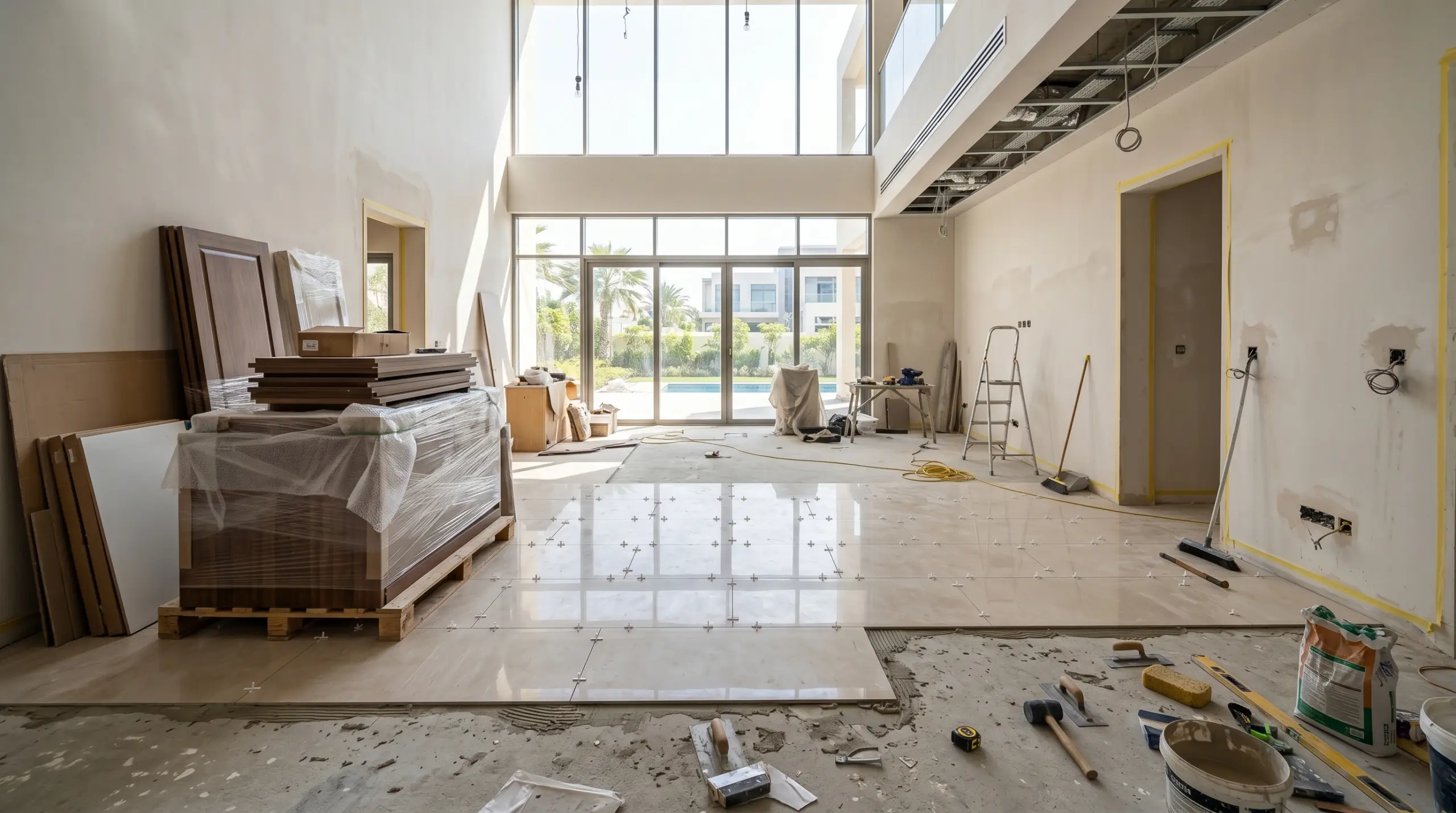
Budget is the first conversation and the one most contractors avoid having honestly. Here is the reality: a cosmetic refresh of a standard three-bedroom villa in areas like Mirdif or Jumeirah Village Circle, covering flooring, paint, curtains, and minor kitchen updates, typically runs between AED 60,000 and AED 120,000 depending on material selections. A mid-range full renovation of the same villa, including bathroom upgrades, built-in joinery, and soft furnishings, usually falls between AED 150,000 and AED 300,000. Premium renovations in areas like Palm Jumeirah, Emirates Hills, or Downtown Dubai penthouses can reach AED 500,000 and above once you factor in high-specification finishes, bespoke furniture, and automated systems.
What drives the spread is not the size of your home but the layers within it. Flooring alone can range from AED 35 per square meter for a mid-quality vinyl plank to AED 350 per square meter for large-format Italian porcelain with a levelled screed. Curtains for a villa with full-height sliding doors can cost anywhere from AED 180 to AED 420 per meter installed, depending on whether you opt for S-fold tracks, motorized systems, or standard pencil pleat.
Breaking Down Renovation Costs by Room
Kitchens are consistently the highest-cost room in a Dubai renovation. New cabinetry, countertops, and appliances for a standard villa kitchen run AED 25,000 to AED 70,000. If you are reconfiguring the layout, plumbing and tiling add another AED 8,000 to AED 20,000 on top. Bathrooms typically cost AED 12,000 to AED 35,000 per room for a full strip-out and refit using mid-range sanitary ware and tiling.
Living and dining areas are where homeowners often overspend on furniture and underspend on flooring, which is a mistake. The floor and window treatment are the two elements that set the tone for everything above them. A well-specified engineered wood floor with proper acclimatization and a quality underlay will outlast three generations of sofas in a Dubai climate.
Bedrooms are the most forgiving room to budget. A full master bedroom renovation including wardrobes, flooring, curtains, and paint averages AED 18,000 to AED 45,000. The variance is almost entirely driven by wardrobe specification and fabric choices.
How Long Does a Home Renovation Take in Dubai?
A realistic timeline for a three-bedroom villa full renovation is 10 to 14 weeks from permit approval to final snagging. Homeowners who have been quoted four to six weeks by eager contractors should treat that figure cautiously. In our experience across hundreds of projects in Dubai, six weeks is achievable only for a single-room fit-out or a purely cosmetic makeover with no structural changes.
Week by week, a typical full renovation breaks down as follows. Weeks one and two cover demolition, structural work, and MEP (mechanical, electrical, plumbing) rough-in. Weeks three to five cover wet trades: tiling, screening, bathroom waterproofing, and any plasterwork. Additionally, Weeks six to eight are for joinery installation, built-in wardrobes, and kitchen cabinetry. Weeks nine to ten cover flooring installation, which must happen after joinery is complete to avoid edge damage. Moreover, Weeks eleven to twelve cover painting, curtain and blind installation, and light fixtures. Weeks thirteen and fourteen are for furniture delivery, final dressing, and snagging.
Timing Your Renovation Around the Dubai Calendar
The Dubai renovation calendar has real pressure points that most guides ignore. July and August are the worst months to begin a major renovation because material lead times stretch and site conditions inside an un-air-conditioned villa are brutal for workers and for certain materials. Joinery adhesives, vinyl flooring, and low-density foam in upholstery all behave differently above 45 degrees Celsius in an unventilated space. If your project starts in summer, your contractor should be running temporary cooling on site.
Ramadan requires a different kind of planning. Working hours shorten, supplier showrooms keep reduced hours, and senior decision-makers are harder to reach for approvals. Add one to two weeks to any timeline that spans Ramadan. Eid-Al-Adha creates a similar gap. The best project windows in Dubai are October to December and February to April, when weather is mild, supply chains are moving, and labor is at full capacity.
What Permits Do You Need for a Home Renovation in Dubai?
Any structural change to a property in Dubai requires a permit from the relevant authority. For villas in freehold communities, this typically means an NOC from the community management (EMAAR, Nakheel, or the relevant master developer) followed by a Dubai Municipality building permit if load-bearing elements are being modified. Cosmetic renovations, defined as flooring, painting, curtains, and non-structural joinery, do not require a permit from the municipality, but the community NOC may still apply depending on your villa’s development.
Apartment renovations in buildings across Business Bay, JBR, or Marina follow a similar NOC route through the building management, with stricter rules around working hours, material delivery windows, and waste removal. Most buildings prohibit heavy drilling before 9am and after 6pm on weekdays, and prohibit all noisy work on Fridays. Factor this into your timeline because it can add three to five days to what appears to be a straightforward installation schedule.
Homeowners who skip the NOC process risk being issued a stop-work order, which in some cases means partially completed work sitting untouched for weeks while paperwork is resolved. Always confirm permit requirements with your contractor before signing any contract.
How Do You Choose the Right Renovation Contractor in Dubai?
The Dubai market has no shortage of renovation contractors, which makes the selection harder rather than easier. A company that handled two successful villa renovations may have done so with a subcontracted team it no longer uses. The questions that matter are: do they have a permanent workshop or factory, do they handle project management in-house or rely on third-party site supervisors, and can they show you completed projects in similar property types to yours?
Ask for two or three client references and actually call them. Ask specifically about snagging: how many rounds of corrections were needed and how responsive was the company after final payment. Post-payment responsiveness is the real test of a contractor’s character in this market.
Pricing transparency is another tell. A trustworthy contractor will itemize their quote by room and trade, not give you a single lump-sum number. If you receive a quote that lists “villa renovation, complete” for AED 180,000 with no breakdown, that is not a quote you can evaluate or compare. Push for line-item pricing even if the contractor resists. It protects both parties.
Red Flags to Watch for in Contractor Quotes
Unusually low quotes in Dubai renovation almost always mean one of three things: the contractor is planning to recover margin through variation orders as the project progresses, the material specifications are vague enough to allow significant downgrading, or the labor is being managed through a chain of subcontractors with no single point of accountability. A quote that comes in 40 percent below two others is not a bargain. It is a risk.
Payment schedules are also worth scrutinizing. A reasonable structure is 20 to 30 percent on contract signing, stage payments tied to defined milestones, and 5 to 10 percent retained until snagging sign-off. Any contractor asking for more than 50 percent upfront on a large project is asking you to carry most of the project risk.
What Materials Work Best in Dubai’s Climate?
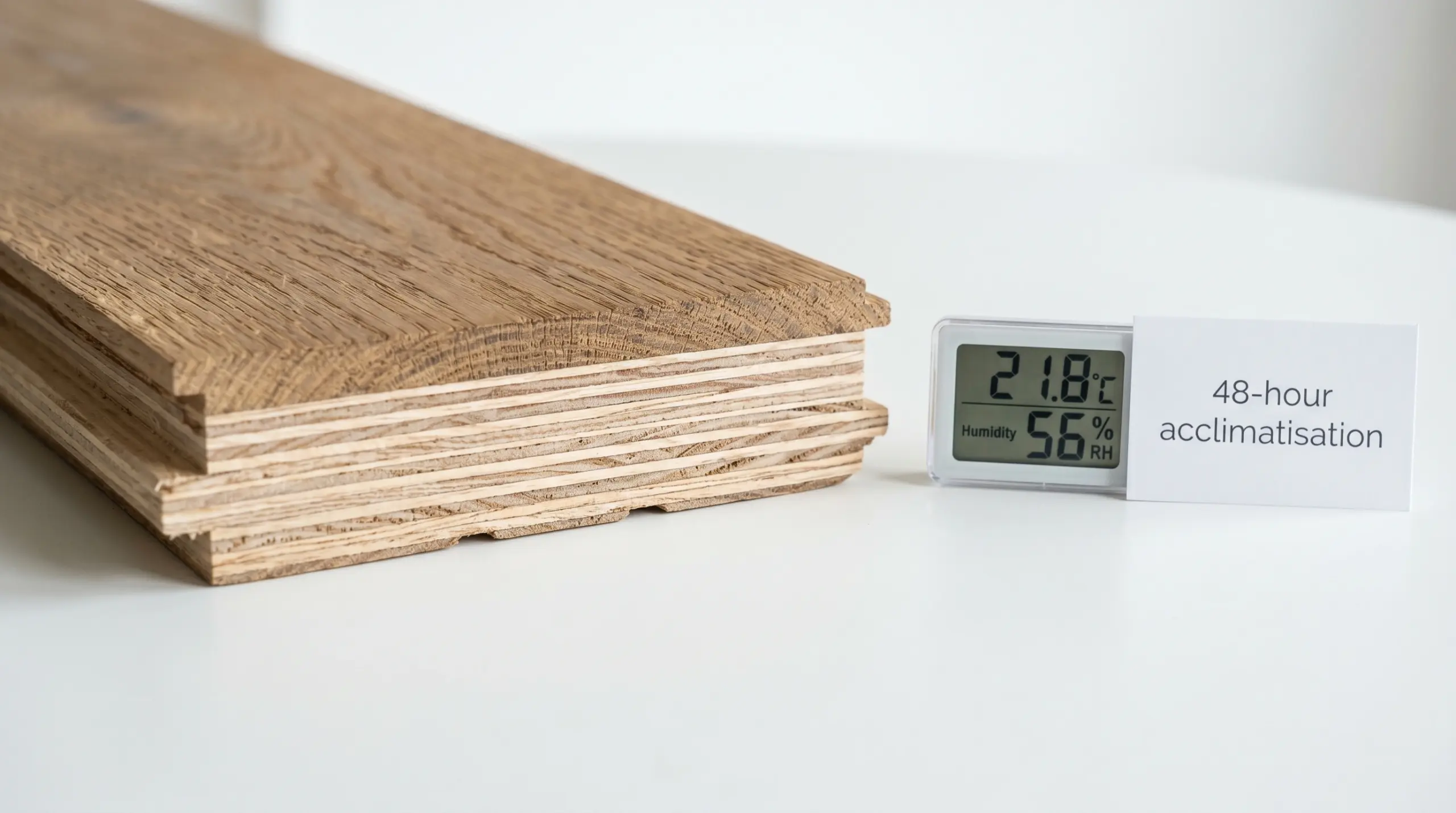
Dubai’s climate exerts specific demands on interior materials that do not appear in international renovation guides. Humidity levels in summer, especially in villas near The Palm or coastal Jumeirah properties, can reach 90 percent. At the same time, air conditioning runs continuously for six to eight months of the year, creating sharp cycles between cold dry indoor air and hot humid outdoor air. Materials that cannot handle this cycling degrade faster here than in any temperate market.
For flooring
Engineered wood outperforms solid hardwood in Dubai because its layered construction is more dimensionally stable in humidity fluctuations. A good engineered wood floor, properly acclimatized for 48 to 72 hours before installation and laid with an appropriate expansion gap, will perform well for 15 to 20 years. Solid hardwood risks cupping and gapping in coastal villa environments. Porcelain tile is the most durable option but runs cold underfoot in air-conditioned spaces, which is why many homeowners in Arabian Ranches and similar villa communities combine tile in high-traffic areas with engineered wood in living and bedroom zones.
For window treatments
UV resistance is non-negotiable. Direct sun exposure through uncoated glass in a south or west-facing Dubai villa will bleach and degrade most standard curtain fabrics within three to four years. Solution-dyed acrylic and high-denier polyester fabrics hold color and structure significantly longer. Blackout curtains for bedrooms should use a foam-back or triple-weave construction rather than a separate blackout liner, which tends to separate at the heading in humid conditions over time.
Wallpaper in Dubai requires a breathable, humidity-resistant adhesive and ideally a vinyl or non-woven substrate. Paper-backed wallpapers in bathrooms or rooms with poor air circulation are a consistent failure point. In our experience, the better investment is a non-woven wallpaper installed with the correct adhesive and a dehumidifier running on site during application.
Managing Your Renovation Project Day to Day
The homeowners who have the smoothest renovations are not the ones who leave everything to the contractor. They are the ones who visit the site two to three times a week, ask specific questions, and make decisions quickly. Decision delays are the single biggest cause of project overruns in Dubai renovation. When a contractor is waiting three days for a client to confirm a grout color, that is three days of potential lost sequencing across multiple trades.
Create a simple decision log before your project begins. List every item that requires your selection: tile, grout, paint color, hardware finishes, fabric references, flooring direction, wardrobe internal layout. Once snagging is signed off, the focus shifts to furnishing, and having decisions made in advance for living room furniture for your renovated space avoids the common pattern of a beautifully finished villa sitting empty while owners deliberate. Make those decisions before demolition starts, not during it. If you are working with a designer or a full-service fit-out company, they should be facilitating this process through a structured sign-off system before any work begins on site.
For homeowners who are not based in Dubai during the renovation, a daily photo update and weekly video call with your project manager is the minimum viable oversight structure. Insist on it in your contract, not as a favor.
Conclusion
A successful home renovation in Dubai comes down to three things done well: a realistic budget built on itemized quotes, a timeline that respects the UAE calendar and material lead times, and a contractor whose post-payment behavior you have verified rather than assumed. Corners cut in any of these three areas are where renovations unravel.
Kustom Space has been working across Dubai, Abu Dhabi, and Sharjah for years, handling everything from single-room fit-outs to complete villa transformations, with an in-house team that manages the process from material selection through to final installation. If you would like to talk through your commercial renovation before committing to anything, our team is on WhatsApp and happy to give you straight answers about scope, budget, and timing, with no sales pressure involved.
FAQ: Home Renovation in Dubai
Q1: How much does a full home renovation cost in Dubai?
A full home renovation in Dubai typically costs between AED 150,000 and AED 300,000 for a standard three-bedroom villa, covering flooring, bathrooms, kitchen updates, joinery, and soft furnishings. Premium renovations in high-end areas such as Palm Jumeirah or Emirates Hills can exceed AED 500,000 depending on material specification and the extent of structural changes. Cosmetic refreshes limited to paint, curtains, and flooring tend to fall in the AED 60,000 to AED 120,000 range. Every project is different, so insist on an itemized quote broken down by room and trade before accepting any figure.
Q2: Do I need a permit for home renovation in Dubai?
Structural changes to a villa or apartment in Dubai require a permit from Dubai Municipality and, in most cases, a No Objection Certificate from the community developer such as EMAAR or Nakheel. Cosmetic works including painting, flooring, curtains, and non-structural joinery generally do not require a municipality permit, though community management approval may still be needed. Skipping the NOC process can result in a stop-work order, which adds weeks of delay to your project. Always clarify permit requirements with your contractor before signing any agreement.
Q3: How long does a home renovation take in Dubai?
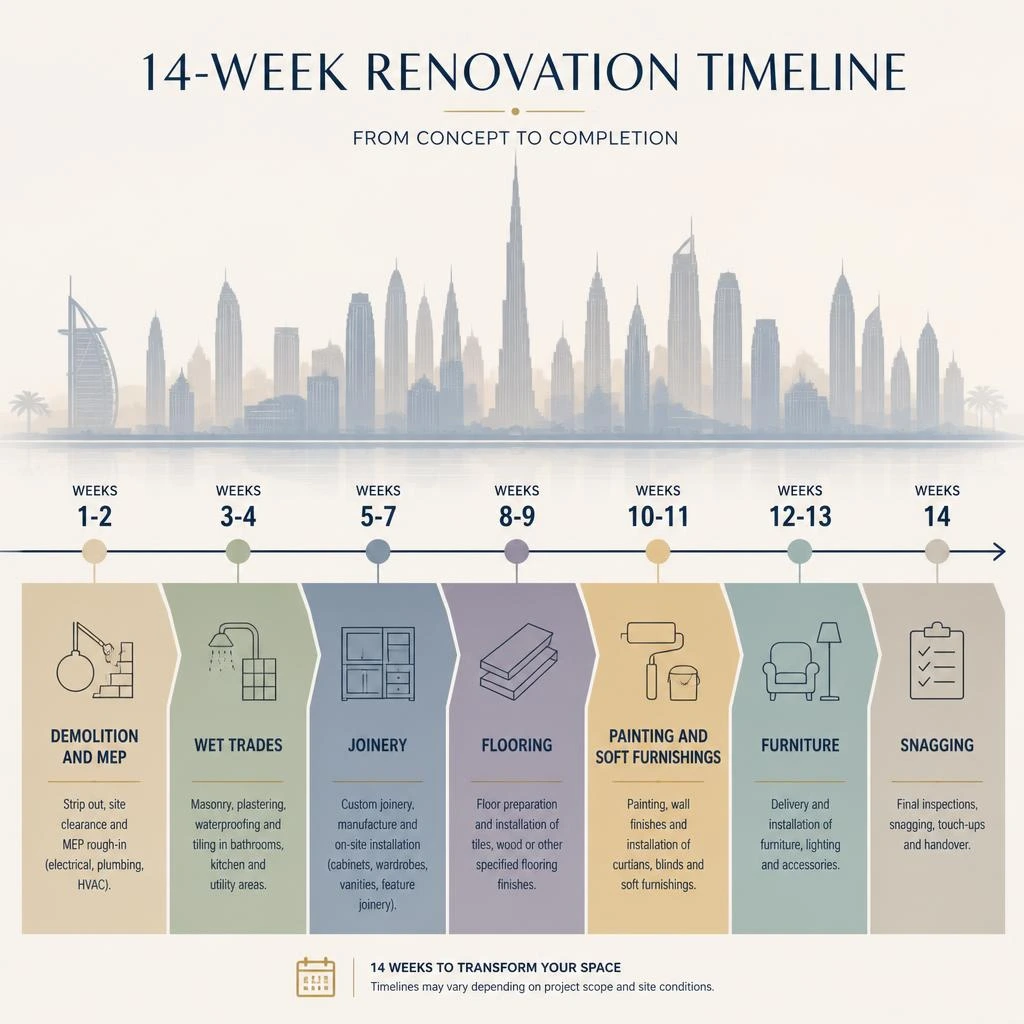
A full renovation of a three-bedroom villa in Dubai realistically takes 10 to 14 weeks from permit approval to final snagging. Single-room or cosmetic-only renovations can be completed in four to six weeks. Timelines extend during Ramadan and Eid-Al-Adha due to reduced working hours and slower supply chains, so adding one to two weeks is advisable if your project overlaps with either. The most efficient project windows in Dubai are October to December and February to April.
Q4: What flooring is best for Dubai villas?
Experts widely consider engineered wood the best flooring choice for Dubai villas because its layered construction handles humidity fluctuation and air-conditioning cycles better than solid hardwood. Large-format porcelain tile is the most durable and easiest to maintain, while vinyl plank offers a cost-effective alternative with reasonable heat and moisture resistance. Solid hardwood is not recommended for coastal villa environments or rooms with direct sun exposure. Whatever material you choose, acclimatization before installation and correct expansion gaps are essential in Dubai’s climate.
Q5: How do I find a reliable renovation contractor in Dubai?
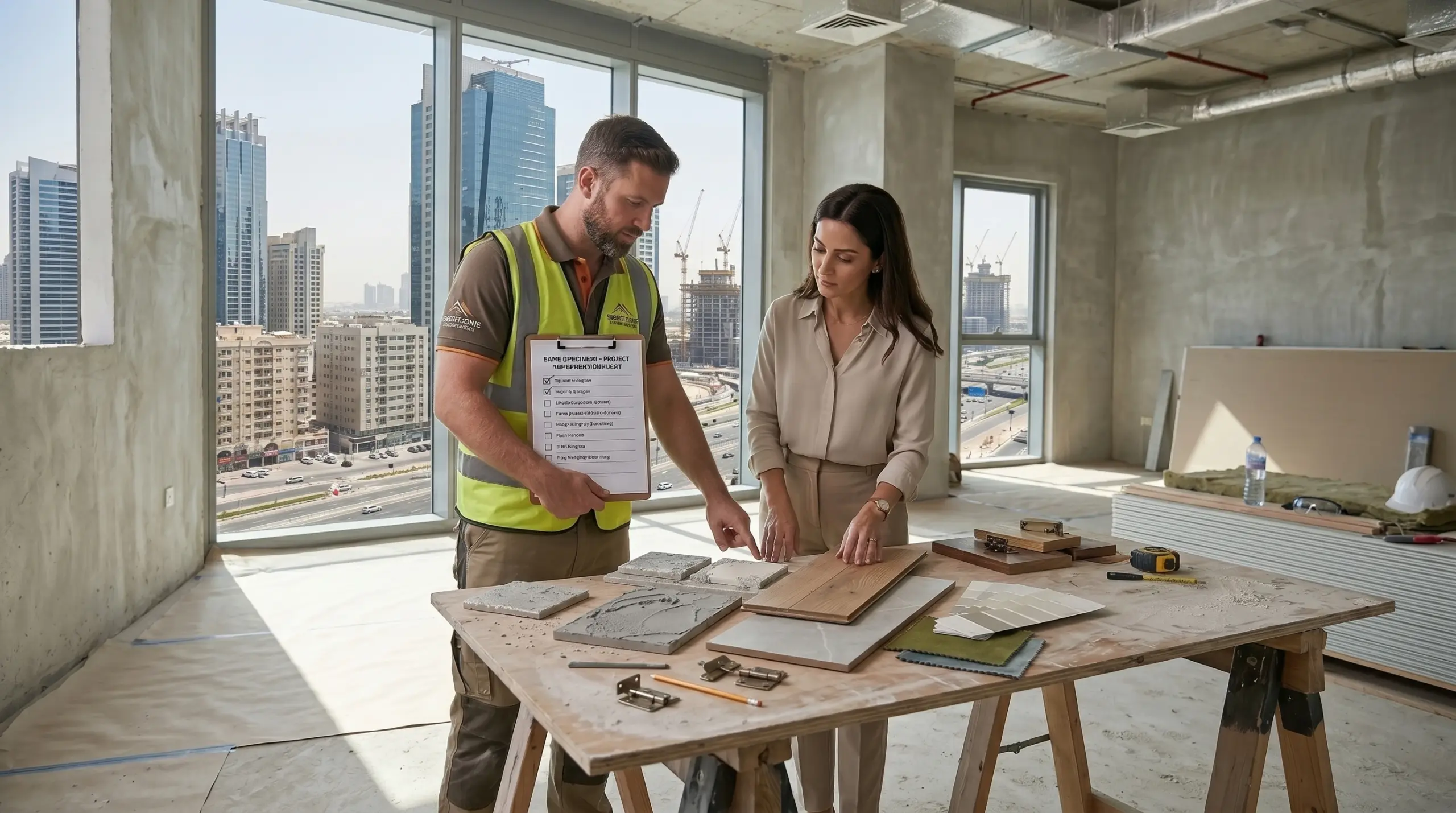
Start by asking for an itemized quote, not a lump-sum figure. A trustworthy contractor will break down costs by room and trade so you can evaluate what you are paying for. Ask for two or three client references and call them directly, specifically asking about snagging responsiveness after final payment. Check whether the company has a permanent workshop or factory and manages project supervision in-house rather than through subcontractors. Avoid contractors who ask for more than 50 percent upfront on a large project, and treat any quote that comes in 40 percent below competitors as a risk, not a saving.
Contact Us
Call us today at +97145704540 or Email us at [email protected]