
How Much Does Custom Furniture Cost in Dubai? 2026 Price Breakdown
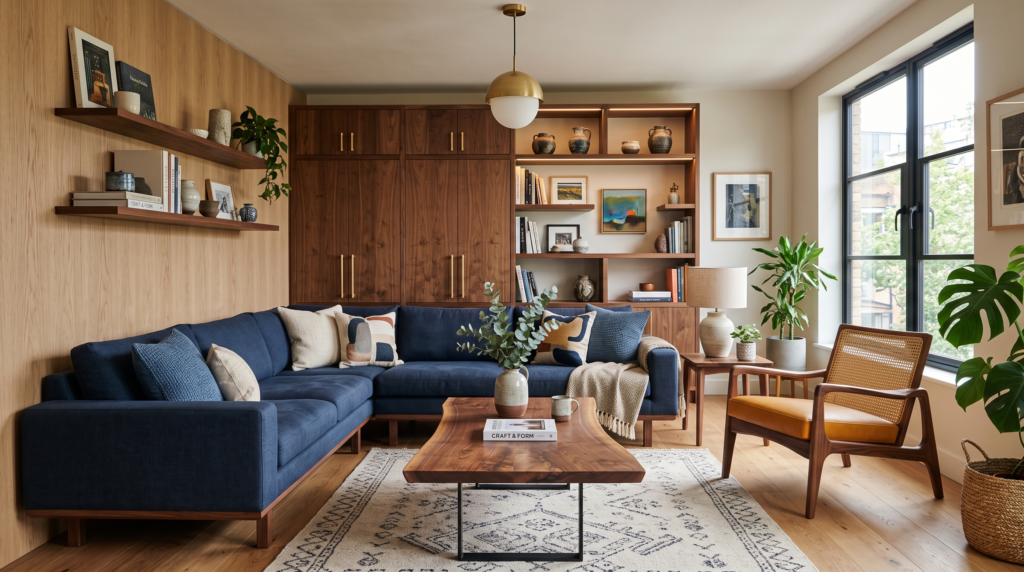
A three-seater sofa quoted at AED 4,500 from one workshop and AED 11,000 from another isn’t unusual in Dubai. The difference rarely comes down to one side overcharging. It comes down to foam density, frame material, fabric grade, and whether a workshop
actually built the piece for a villa that runs air conditioning eleven months a year. If you’re trying to work out a realistic custom furniture dubai cost for your home, the honest answer starts with understanding what you’re actually
paying for, not the AED number on a quote.
What Determines Custom Furniture Cost in Dubai in 2026
Four things shape custom furniture cost in Dubai: raw material grade, joinery or upholstery complexity, finishing method, and workshop overhead. A factory-direct workshop in Al Quoz or Ras Al Khor will typically undercut a showroom-branded retailer by
20 to 35 percent for a comparable spec. You’re not paying for a retail floor. That said, cheaper isn’t automatically better value once you factor in Dubai’s climate. Low-grade foam and untreated wood degrade faster under sustained air conditioning
and seasonal humidity swings. This matters most in categories where comfort and climate intersect directly, like custom sofas for summer comfort, where the invisible parts of construction cost more than the visible ones.
Location within the city plays a smaller but real role too. Workshops based further from central Dubai, in areas like Al Quoz, Ras Al Khor, or industrial zones in Sharjah, generally quote 10 to 15 percent less than workshops with a Downtown or JBR showroom
presence. Rent is simply lower there. Build quality isn’t necessarily different, so it’s worth asking where a workshop is actually based before you assume a lower quote means lower quality.
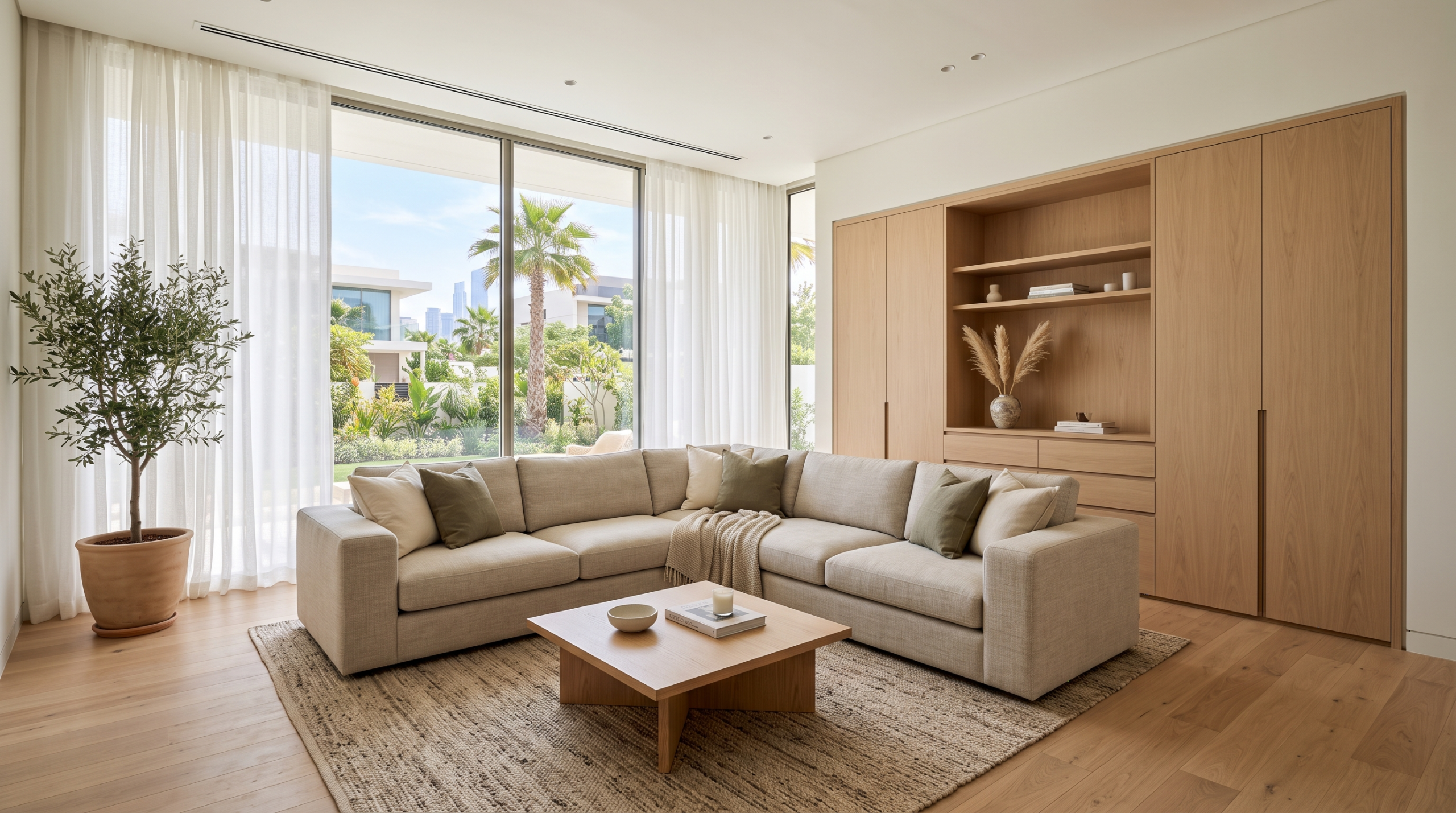
Sofas and Seating
Custom sofas in Dubai typically run AED 3,800–7,500 for a standard three-seater in a mid-range fabric. L-shaped or modular sectionals with high-resilience foam and performance fabric run AED 8,000–18,000. Leather versions sit higher, usually AED 12,000–25,000
depending on hide grade. For households specifically asking for custom sofas for summer comfort, expect to add roughly AED 400–800 to the base price for upgraded foam and breathable fabric. It’s a modest premium against the comfort difference over
a hot season.
Wardrobes and Storage
Most Dubai workshops price fitted wardrobes per linear metre. Expect AED 1,800–3,500 per metre for laminate or veneer finishes, and AED 3,800–6,500 per metre for solid wood or lacquer. Sliding door systems generally cost 10 to 15 percent more than hinged
doors because of the track hardware. They’re the more practical choice for smaller bedrooms in apartments where door swing space is limited.
Dining Tables and Cabinetry
A custom dining table for six to eight seats generally costs AED 4,500–9,000 depending on wood species and tabletop treatment. Engineered wood options come in lower than solid teak or oak. Matching dining chairs typically add AED 550–1,100 per chair depending
on upholstery and frame material. A matching display or crockery cabinet usually runs AED 3,500–7,000.
Beds and Bedroom Furniture
A custom upholstered bed frame with a headboard typically costs AED 3,200–6,800 for a king size. A matching bedside table pair adds AED 1,200–2,400. Storage beds with a hydraulic lift base cost roughly AED 800–1,500 more than a standard base. It’s a common
request in apartments where extra storage space is limited.
Kids’ Furniture and Study Areas
Custom kids’ bedroom furniture, including a study desk, bed frame, and storage unit, typically runs AED 5,500–10,500 as a set. Pricing depends mainly on whether the pieces extend as the child grows. Bunk beds with an
integrated study desk are a common request in Dubai apartments with two children sharing a room. They typically cost AED 6,500–12,000 depending on wood grade and safety rail specification.
Outdoor and Balcony Furniture
Custom outdoor furniture for Dubai balconies and villa gardens needs UV-stabilised fabric and rust-resistant frames, which pushes cost up compared to indoor equivalents. A custom outdoor sofa set typically costs AED 5,000–11,000. The premium goes toward
marine-grade cushion fill that resists moisture retention during the humid months. The same thinking behind custom sofas for summer comfort applies outdoors too, just with different materials suited to sun and moisture exposure.
How Much Does a Custom Sofa Cost in Dubai?
A custom sofa in Dubai typically costs AED 3,800 to 18,000. Frame timber, foam density, and fabric choice drive the price more than sofa size alone. The single biggest cost swing we see is foam.
Sofa cost isn’t just about looks here, it’s about how the piece performs once the AC runs for months at a stretch. Low-density foam softens and loses shape faster in a cooled, dry indoor environment than most people expect. That’s why custom sofas for
summer comfort in Dubai homes lean toward high-resilience foam graded at 35kg/m³ or above. A sofa built for custom sofas for summer comfort also uses breathable, tightly woven fabric rather than a heavy weave. Heavy weaves trap heat when guests sit
for long stretches during Ramadan gatherings or family visits.
Fabric accounts for roughly 30 to 40 percent of total sofa cost. A linen-look performance fabric runs AED 120–220 per meter. Genuine leather can push AED 400–900 per meter depending on origin and tanning process. For households prioritizing custom sofas
for summer comfort, we usually recommend a mid-weight performance weave over velvet. Velvet holds heat and shows AC-related static more visibly in a cooled room.
Frame construction matters just as much
Kiln-dried hardwood frames cost more upfront, typically adding AED 600–1,200 to a standard three-seater. They resist warping better in Dubai’s humidity than softwood frames, particularly in villas near the coast like JBR or Palm Jumeirah where salt air adds an extra variable.
Cushion fill is where a lot of the summer comfort conversation actually happens, and it’s often overlooked in favor of fabric color. A foam-and-fiber wrap cushion wraps a high-resilience foam core in a layer of polyester fiber. It costs roughly AED 150–300
more per seat than plain foam, but it stays cooler against skin and holds shape better under continuous AC exposure. This is exactly the standard behind custom sofas for summer comfort. Feather-down blend cushions look luxurious, but they soften faster
in a cooled room and typically need reploughing every few months. We tend to steer clients away from them for family sofas used daily.
Stitching detail is a smaller cost factor but worth mentioning. Double-stitched seams add roughly AED 200–400 to a standard sofa. They hold up better over years of use than single-stitch construction, particularly on arm and seat edges that see the most
contact.
Best Air-Conditioned Room Setups and Furniture Choices
Furniture built for the best air-conditioned room setups behaves differently from furniture built for a naturally ventilated space. That difference shows up directly in cost. In most Dubai homes, the living room and bedroom run air conditioning almost
continuously from April through October. That means furniture spends most of its life in a cool, dry, low-humidity microclimate rather than the outdoor heat.
For best air-conditioned room setups
We generally recommend avoiding high-gloss lacquer finishes on wood furniture placed directly under AC vents. Rapid temperature cycling near a vent can cause micro-cracking in the finish over two to three years. A matte or satin lacquer, which costs roughly
the same, holds up better.
Fabric choice again plays into best air-conditioned room setups.
Cotton-linen blends breathe well and don’t build static in a constantly cooled room, while synthetic velvets tend to develop visible static cling near vents. If a client specifically asks us for the best air-conditioned room setups for a home office or
majlis, we typically spec a tighter-weave fabric. We also add a frame with slightly more ventilation gaps in the base, to prevent trapped moisture from AC condensation during humid months.
Home offices deserve their own mention here.
More Dubai residents work from home at least part of the week than they did a few years ago. Best air-conditioned room setups for a home office usually call for a desk in engineered wood rather than solid wood. Solid wood desks positioned near a vent
tend to warp slightly at the joints over time. An ergonomic chair with breathable mesh backing performs better here than a fully upholstered chair, which can feel clammy despite the cool room temperature.
Majlis seating is another area where best air-conditioned room setups genuinely change the spec. A majlis that runs AC continuously during gatherings needs firmer, higher-density foam in the base cushions than a casual living room sofa. Seating duration
is longer, and guests sit cross-legged or low to the ground for hours at a time. This is one of the more common complaints we hear from clients who ordered generic seating instead of asking specifically for best air-conditioned room setups guidance
upfront.
Kids’ rooms benefit from the same thinking. Best air-conditioned room setups for a shared kids’ room typically call for a slightly firmer mattress and a bed frame finish that won’t show condensation marks near the AC vent, a common issue in rooms where
the vent sits close to the bed head.
None of this changes the sofa’s silhouette or the wardrobe’s finish. It changes what’s underneath, which is exactly the part that doesn’t show up in a showroom photo but does show up in a five-year-old piece of furniture.
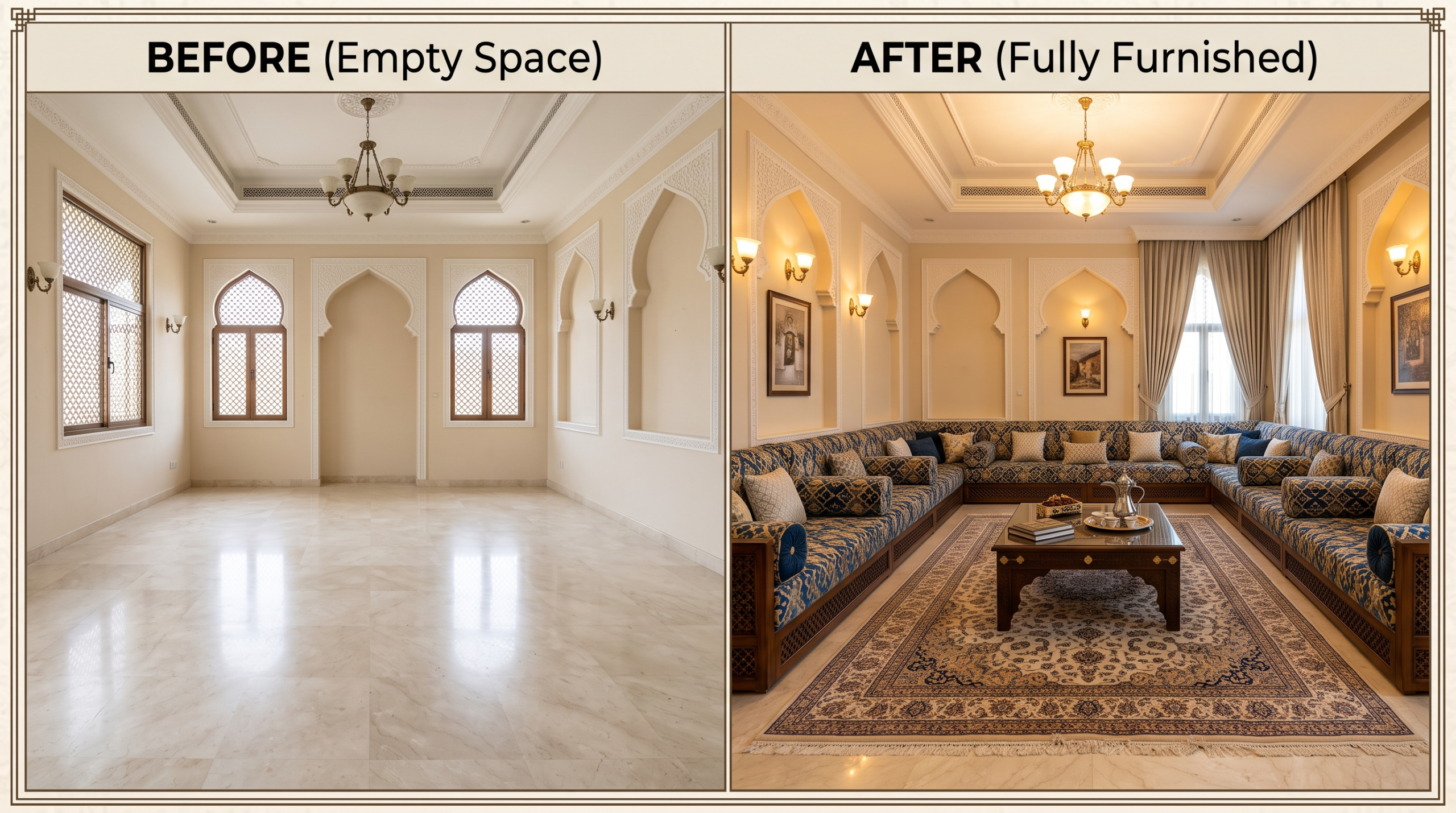
Why Is Custom Furniture More Expensive Than Ready-Made Furniture in Dubai?
Custom furniture typically costs 25 to 60 percent more than comparable ready-made pieces because a workshop builds it to your exact dimensions, chosen materials, and Dubai’s specific climate
conditions rather than mass-producing it to a generic spec. Manufacturers produce ready-made furniture in bulk, often overseas, with standardized foam and fabric that may not account for sustained AC exposure or dust infiltration common in Dubai villas.
The labor difference is real too. A custom three-seater sofa takes a skilled upholsterer roughly 18 to 25 hours of hands-on work, compared to a largely automated process for mass-market pieces. That labor cost is what you’re paying for when a workshop
quotes AED 6,000 instead of AED 2,500 for what looks, at a glance, like a similar sofa.
There’s also a fit argument specific to this market. Many Dubai villas and apartments have non-standard room proportions, particularly older Arabian Ranches and Jumeirah properties, where a ready-made sofa either doesn’t fit the wall run or leaves an
awkward gap. Bespoke furniture Dubai cost reflects that precision. For a lot of homeowners, that’s the actual reason they choose custom over ready-made in the first place, not the aesthetics.
Shipping and import costs factor in here too, though not in the direction most people assume. Ready-made furniture imported from overseas often carries hidden freight and import duty costs baked into the retail price, while a factory-direct custom piece
built locally avoids that markup entirely. This is part of why a locally built custom sofa can sometimes land closer in price to an imported ready-made one than expected, even before you factor in the fit and material advantages.
Materials That Hold Up in Dubai’s Climate
Fabric and Upholstery
Performance fabrics with a UV resistance rating and stain-guard treatment cost roughly 15 to 20 percent more than untreated fabric. They resist fading near windows, which matters in a city where direct sun exposure through glass is intense even with UV-filtering
film. Fabric for custom sofas for summer comfort should also be tested for colorfastness, since cheaper dyes visibly shift tone within a year of consistent light exposure. Fabric with a plasma or Nano coating adds a further 8 to 12 percent to fabric
cost but resists dust and spills noticeably better, a genuine consideration in villas near construction zones or unpaved areas.
Wood and Joinery
Kiln dried and moisture treated wood resists the warping that Dubai’s humidity swings cause in untreated timber, particularly during the shoulder months when outdoor humidity spikes before the AC dominated summer sets in. Engineered wood with a real veneer
offers a reasonable middle ground, typically 30 percent cheaper than solid wood with comparable stability. Solid teak remains the most climate resilient wood option available locally, though it typically adds 25 to 40 percent to joinery cost compared
to oak or ash.
Metal and Hardware
Powder coated steel frames and stainless or brass plated hardware resist the corrosion that standard chrome fittings develop faster in coastal humidity. This is a small line item, usually AED 150–400 per piece, but it’s the difference between hardware
that lasts and hinges that seize within two years. Soft-close drawer runners, while not climate-specific, are worth the additional AED 80–150 per drawer given how often wardrobe and cabinet drawers get opened daily.
Glass, Stone, and Accent Finishes
Tempered glass tabletops and shelving inserts typically add AED 300–700 per piece depending on thickness. They hold up well against Dubai’s dust since you can wipe them down without staining. Marble or quartz accent tops on side tables or console units
add a further AED 500–1,200 depending on stone grade, and resist heat marks from cups and devices better than lacquered wood surfaces.
How Long Does Custom Furniture Take to Make in Dubai?
Most custom furniture in Dubai takes 3 to 6 weeks from final material sign-off to delivery, depending on the piece and current workshop load. Typical lead times run as follows: a standard sofa takes 3 to 4 weeks, a dining set takes 4 to 5 weeks, a fitted
wardrobe or full joinery package takes 5 to 6 weeks including installation, and a full villa furniture package across multiple rooms typically takes 7 to 10 weeks when you order it together.
Timelines extend during Ramadan and around Eid Al Adha, when workshop hours shorten and many skilled tradespeople take leave. We generally advise adding one to two extra weeks to any order placed in the month before either period. Peak summer months,
when villa renovations spike ahead of the new school year, can also add a week or two of queue time at busier workshops.
Material sign-off is the part that most affects timeline, and it’s also the part homeowners can control. Delayed fabric selection is the single biggest cause of missed delivery dates we see. The clock only starts once you confirm a final fabric or wood
finish in writing, not from the date of the initial order.
Villa vs Apartment: How Space and Layout Affect Your Budget
Villa furniture packages in Dubai generally cost more in total simply because villas have more rooms and larger floor plans, not because villa-specific furniture is priced higher per piece. A four-bedroom villa in Arabian Ranches or Al Barsha furnishing
a living room, majlis, dining area, and three bedrooms will typically land in the AED 45,000–90,000 range for a full bespoke furniture Dubai package, depending on finish level.
Apartment furnishing in areas like Business Bay or Downtown tends to priorities multi-functional pieces, since floor space is tighter. Custom furniture cost per square meter is often slightly higher in apartments, because compact, built-in solutions like
wall-mounted storage or fold-away dining tables require more precise joinery than standalone villa furniture.
Layout also affects the AC-related decisions above. A villa majlis with high ceilings and multiple AC zones needs furniture specked differently than a single-zone apartment living room. Best air-conditioned room setups for a villa majlis and best air-conditioned
room setups for a compact apartment living room are genuinely two different specs, even when the furniture looks similar in a catalogue photo.
Commercial fit-outs follow a different budget logic entirely, though the same climate principles apply. A small office reception and meeting room package, for example, typically runs AED 15,000–35,000 for custom seating, a reception desk, and a meeting
table, with fabric and finish choices leaning heavily toward best air-conditioned room setups thinking, since offices run AC continuously during business hours with little variation.
How to Get an Accurate Custom Furniture Quote in Dubai
The most reliable way to get an accurate custom furniture cost is to request a breakdown by material, labour, and finish rather than a single lump-sum number. A lump sum makes it difficult to compare two workshops fairly. Ask specifically what foam density,
wood treatment, and fabric grade are included, and whether the quote accounts for climate-specific choices like those used in custom sofas for summer comfort or best air-conditioned room setups.
It’s also worth asking whether the quoted lead time includes installation or just workshop production, since workshops sometimes list these separately and it can add a week that isn’t obvious from the initial number. A workshop that walks you through
these details without pushing you toward the most expensive option is usually the more trustworthy one to work with.
Bespoke furniture Dubai cost in Dubai comes down to four honest variables: material grade, labour complexity, climate-appropriate construction, and how precisely the piece needs to fit your space. Get quotes broken down by these four factors rather than
a single lump sum, and you’ll be able to compare workshops properly instead of guessing why one number is double another. For categories like custom sofas for summer comfort, that precision matters even more.
Contact Us
Choosing custom furniture is a real investment, not a quick purchase, and it’s worth taking the time to get the material and construction details right rather than rushing to a decision. KustomSpace built
furniture for Dubai villas and apartments for years and manage the process from initial design through to installation, so you’re not coordinating separately with a workshop, an upholsterer, and a delivery team. If you’d like to talk through your
project before committing to anything, our team is on WhatsApp no sales pitch, just straight answers.
Address: Office# 110C, Diamond Business Center, Arjan, Al Barsha 3, Dubai – United Arab Emirates
- Call: +971589583686
- Whatsapp: +97145704540
- Customer Support Whatsapp/Call: +971588245885
- Mon – Sat : 10:00 – 20:00 (GST)
- Email: [email protected]
Frequently Asked Questions: Custom Furniture in Dubai
How much does custom furniture cost in Dubai on average?
Most custom furniture pieces in Dubai cost between AED 1,800 and AED 18,000 depending on the item, material, and complexity. A single accent piece like a bedside table sits at the lower end, while a full sofa or fitted wardrobe run sits
higher. Full villa packages typically range from AED 45,000 to AED 90,000.
Is custom furniture more expensive than ready-made furniture in Dubai?
Yes, custom furniture typically costs 25 to 60 percent more than comparable ready-made pieces. The difference comes from exact-fit dimensions, climate-specific materials, and hands-on labour, not from markup. A custom
three-seater sofa alone takes a skilled upholsterer 18 to 25 hours to build.
What is the cheapest type of custom furniture to order in Dubai?
Smaller accent pieces like bedside tables, single dining chairs, and simple shelving units are the most affordable custom items, generally starting around AED 1,200. Larger upholstered pieces like sofas and beds cost more because of foam,
fabric yardage, and frame construction.
How long does it take to get custom furniture made in Dubai?
Most custom furniture takes 3 to 6 weeks from final material sign-off to delivery. A standard sofa takes 3 to 4 weeks, a wardrobe or joinery package takes 5 to 6 weeks, and a full villa package can take 7 to 10 weeks. Add one to two weeks
during Ramadan or Eid Al Adha.
Does custom furniture cost more for a villa than an apartment?
Villa furniture packages cost more in total simply because villas have more rooms, not because villa furniture is priced higher per piece. A four-bedroom villa package typically runs AED 45,000 to AED 90,000, while apartment furnishing
costs less overall but can run slightly higher per square metre due to compact, built-in joinery.
Why does foam density affect custom sofa pricing so much?
Foam density is one of the biggest cost drivers because it determines how well a sofa holds up under sustained air conditioning. High-resilience foam graded at 35kg/m³ or above costs more upfront but resists softening and sagging far
longer than low-density foam in a constantly cooled room.
Related Articles:
- Complete Home Renovation Guide Dubai: Costs, Timeline and Process
- Luxury Home Makeover Before & After – Dubai Real Projects
- Best Curtains and Blinds for UAE Villas – Heat Resistant & Stylish